
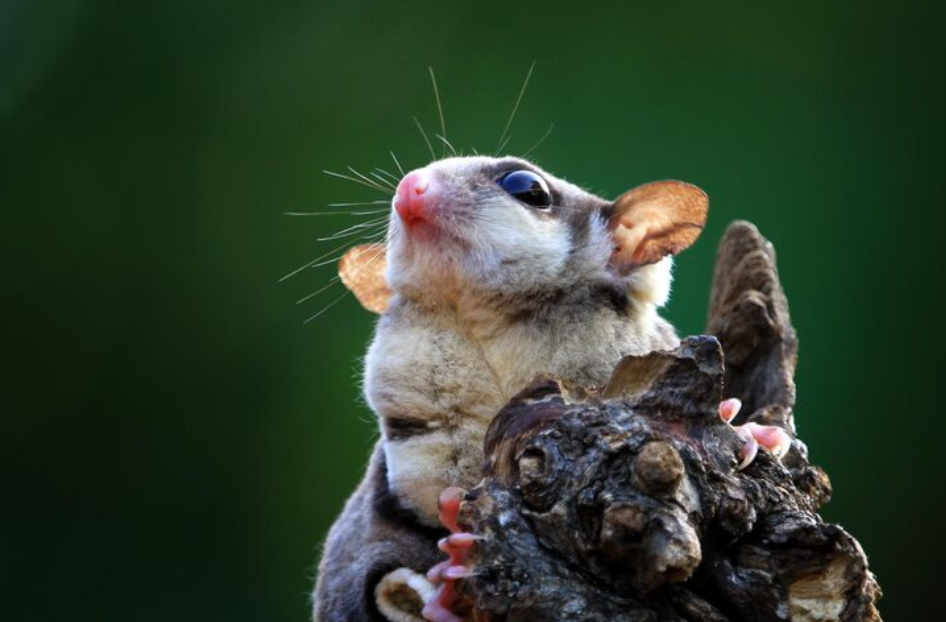
Sugar gliders, with their adorable big eyes and affectionate personalities, have become exotic companions in many Hong Kong households. However, they are not easy pets to care for. As marsupials, they have very strict environmental, dietary, and social needs. Without proper knowledge, owners often only notice problems once serious symptoms appear.
Recreating the Natural Habitat: Key Points for Enclosure Setup
Sugar gliders are arboreal animals that excel at climbing and gliding. In Hong Kong’s limited living spaces, a tall cage is recommended rather than a wide one.
Sugar gliders are arboreal animals that excel at climbing and gliding. In Hong Kong’s limited living spaces, a tall cage is recommended rather than a wide one.
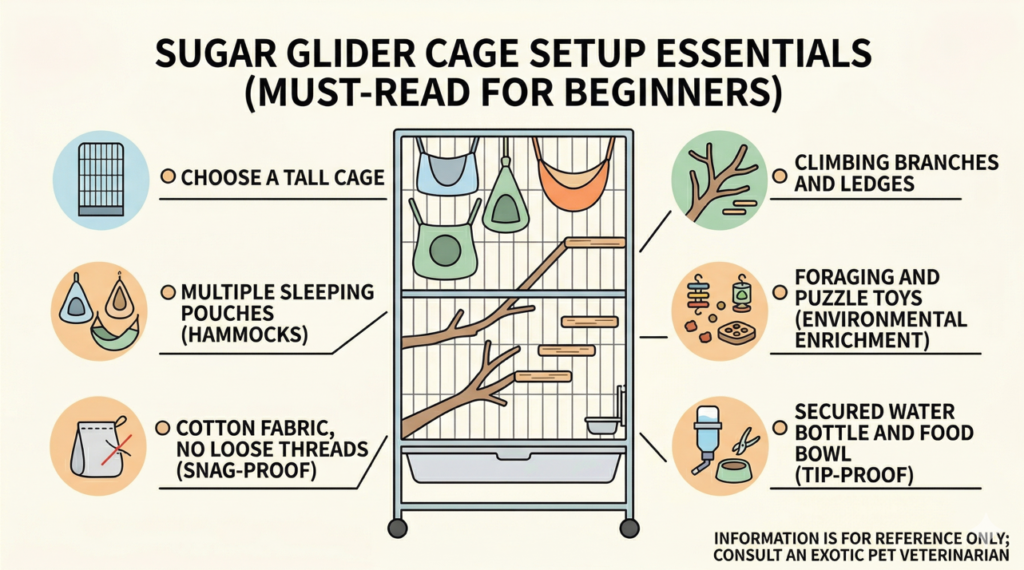
- Space recommendation: The minimum recommended size is 90 cm high and 60 cm wide.
- Enclosure setup: Multiple sleeping pouches (hammocks) must be provided, and cotton fabric without loose threads should be used to prevent nails from catching and causing fractures.
- Temperature and humidity management: Hong Kong summers are hot and humid, while indoor temperatures can vary widely in winter. The ideal environmental temperature for sugar gliders is 24°C to 28°C. When temperatures fall below 18°C, they may enter torpor, which can be very dangerous for weak individuals. Using heating to regulate room temperature in winter is recommended.
The Key to Lifespan: Nutrition and Diet
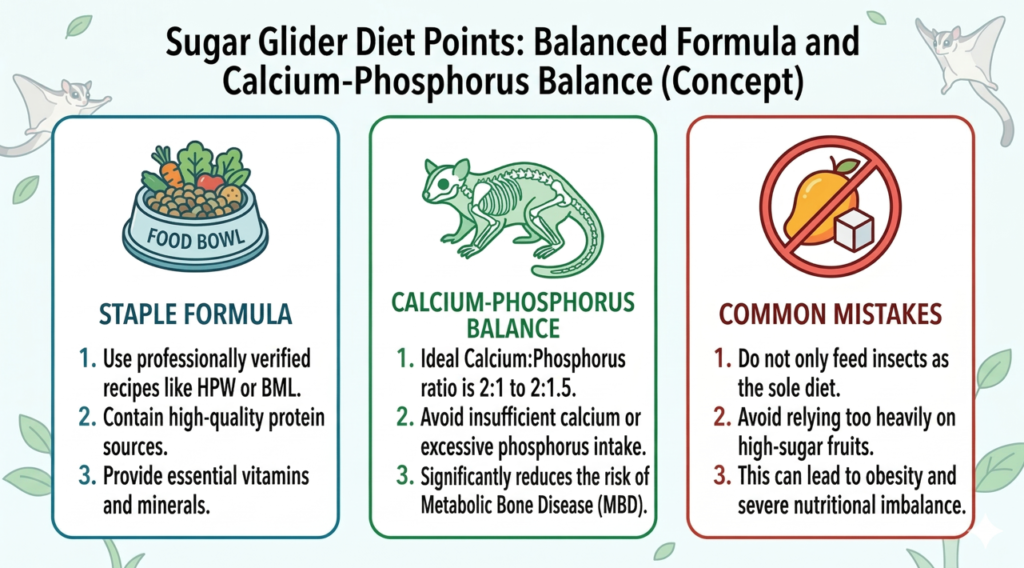
Clinically, one of the most common reasons sugar gliders are brought in for treatment is nutritional imbalance.
- Metabolic bone disease (MBD): This occurs when the diet is too low in calcium and too high in phosphorus, causing the body to draw calcium from the bones. Affected sugar gliders may show hind limb weakness, trembling, or even paralysis.
- Dietary advice: Owners should follow professional feeding plans such as HPW or BML to ensure the diet includes quality protein, calcium supplementation, and fresh fruits and vegetables. Feeding only insects or sweet fruits should be avoided, as this can lead to obesity and cataracts.
Hidden Stress and Self-Mutilation
Sugar gliders are highly social animals. In the wild, they live in groups. If kept alone for long periods or deprived of companionship, they can experience severe psychological stress and develop self-mutilating behaviour, such as over-grooming that causes abdominal hair loss, or even biting their own tail or genitals. If wounds are present, veterinary help should be sought immediately, and the adequacy of environmental enrichment should be reviewed.
When Should You See a Vet?
Because sugar gliders are prey animals, they are very good at hiding signs of illness. If you notice any of the following, the condition is often already quite serious and veterinary attention should be sought promptly:
- Lethargy: Usually active at night, but now sleeping throughout the night.
- Rapid weight loss: Owners are advised to record body weight weekly using an electronic scale.
- Abnormal elimination: Loose stools, blood in the stool, or difficulty urinating.
- Abnormal vocalisation: Repeated hissing or crying sounds.
Recommended Professional Health Checks
An annual health check is recommended, including a faecal test to screen for protozoal infections and a dental assessment. If neutering is needed, the procedure should be carried out only when the animal has reached an appropriate weight and is otherwise healthy, and it should be performed by a veterinarian experienced with exotic pets.
FAQ
- Q: Must sugar gliders be kept in pairs?
- A: Keeping them in pairs or small groups is strongly recommended. Humans cannot replace social interaction with their own kind.
- Q: Why do my sugar glider’s nails grow so quickly? Do they need trimming?
- A: Yes. Overgrown nails can catch on hammocks and cause injury. Trimming every 2 to 3 weeks is recommended, and a veterinarian should demonstrate the correct trimming point.
- Q: Can sugar gliders eat local Hong Kong fruits?
- A: They can eat some fruits, such as papaya and apple, but the proportions should be controlled, and high-sugar fruits such as durian or excessive grapes should be avoided.
- Q: My sugar glider has a strong body odour. Can I bathe it?
- A: Full-body bathing should never be done. It can disrupt their scent-marking ability and lead to chilling. The smell usually comes from secretions from male scent glands, and neutering can reduce the odour effectively.
- Q: Where can I find a vet for sugar gliders?
- A: CityVet’s Tsuen Wan and Yuen Long branches both provide exotic pet services. Advance booking is recommended.
CityVet Sugar Glider Clinic
CityVet is committed to providing outstanding comprehensive veterinary care, guided by the core values of professionalism, compassion, and trust. We aim to offer reasonable fees, introduce advanced equipment, and explain treatment options clearly to pet owners. To book a sugar glider consultation, please call our Tsuen Wan branch at 2623 5500 or our Yuen Long branch at 2477 9990. Address: G/F, 186 Sha Tsui Road, Tsuen Wan / Shop 2, G/F, Fuk Shun Building, 25 Ping Wui Street, Yuen Long.
Disclaimer: This article is for general information only and does not replace professional medical diagnosis. If you have any concerns, please book a veterinary examination as soon as possible.