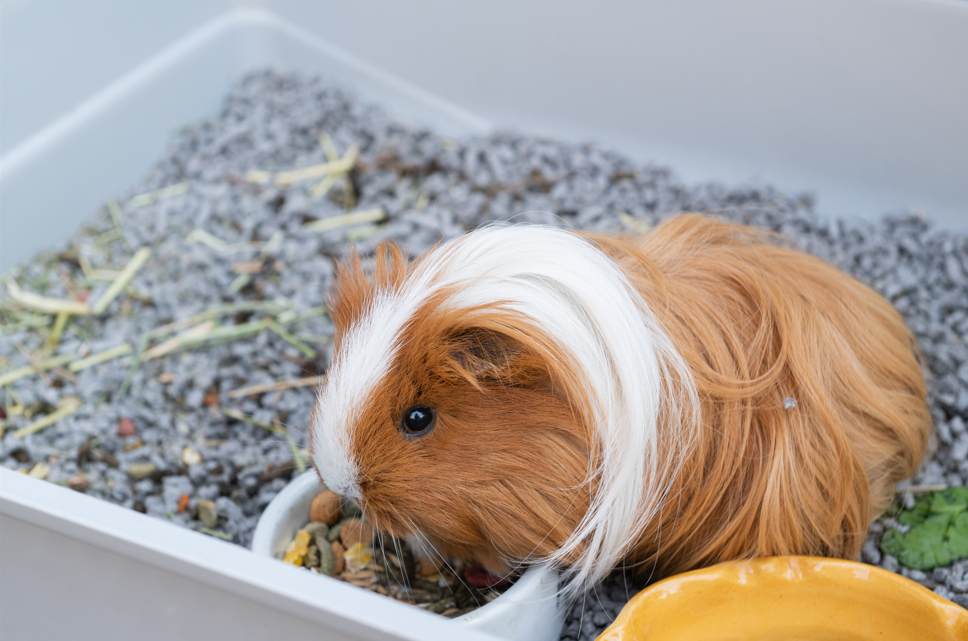
In Hong Kong, guinea pigs have become close companions in many households due to their gentle temperament and adorable appearance. As herbivorous small animals, a guinea pig’s excretions are often a critical indicator used by owners to evaluate their physical health. Many novice owners frequently discover with panic when cleaning the tray that their guinea pig has passed white, milky-white, or cloudy urine.
Is white urine in guinea pigs a normal physiological phenomenon or a warning sign of illness? This requires looking at their unique specialized physiological structure and dietary habits. If one fails to distinguish between “normal calcium urine” and “pathological stones” in a timely manner, it is highly likely to delay treatment, leaving guinea pigs to suffer severely from urinary tract diseases.
What is Guinea Pig “Calcium Urine”?
Unlike dogs, cats, or humans, guinea pigs have an exceptionally high absorption efficiency for calcium from their food. Regardless of whether their body needs it, they absorb most of the ingested calcium into their bloodstream, and excess calcium is primarily excreted from the body via the kidneys along with urine.
When this urine containing high concentrations of calcium is passed and dries up, it leaves a white, powdery crystalline residue on the tray, which is commonly referred to as “calcium urine.”
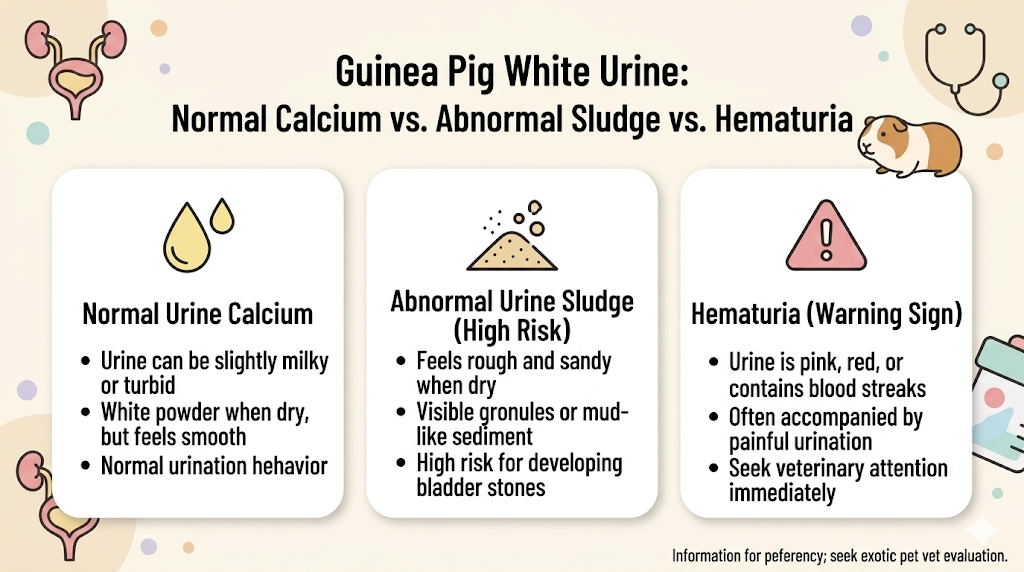
- Normal calcium urine: Although the urine appears milky-white or cloudy, the texture is smooth with no gritty feel, and the guinea pig urinates easily and comfortably.
- Abnormal calcium urine: If the urine feels rough like sand after drying (urinary sand), or even presents as a thick, sludge-like paste, this indicates excessive calcium deposition inside the body, marking a high-risk period for stone formation.
From Calcium Urine to Bladder Stones: Common Symptoms and Warning Signs
When calcium crystals in the urine continually accumulate, they can easily form hard stones in the kidneys, ureters, bladder, or urethra. A guinea pig’s urethra is extremely tiny, and stones will trigger intense pain and inflammation. If your beloved pet exhibits the following symptoms, owners must be highly alert:
- Vocalizing during urination: Guinea pigs may emit painful squeaks when straining to urinate due to stone friction or urethral spasms.
- Hunching the back or pressing the abdomen to the ground: Due to abdominal pain, they may excessively arch their bodies when urinating or strain frequently only to pass a few drops of urine.
- Hematuria: Stones scratch the urinary tract mucosa, causing the urine to appear pink, red, or contain blood streaks. This may not be easily detected on dark-colored bedding, requiring careful observation.
- Wetness or redness/swelling around the genitals: Due to urine leakage or difficulty urinating, the fur on the lower abdomen remains soiled with urine long-term, leading to inflammation.
- Inappetence and lethargy: Severe pain will cause guinea pigs to stop eating hay, further triggering life-threatening gastrointestinal stasis.
Causes of Guinea Pig Urinary Problems
The factors causing a guinea pig to develop severe calcium urine or bladder stones are usually multi-factorial and interwoven. In Hong Kong’s husbandry environments, the following three points are particularly common:
- Imbalanced Calcium-to-Phosphorus Ratio in Diet
This is the most central cause. Many owners feed alfalfa hay as the staple hay for adult guinea pigs long-term, or provide excessive amounts of alfalfa-based pellets. Alfalfa hay contains extremely high calcium levels and is only suitable for growing pups or pregnant females. Long-term consumption by adult guinea pigs leaves the kidneys completely incapable of handling such a massive output of calcium excretion.
- Inadequate Water Intake
Summers in Hong Kong are hot. If a guinea pig does not actively drink water due to an un-smooth water flow from the bottle, water that is not fresh enough, or simply a dislike for drinking, it can cause the urine to become overly concentrated. When water in the urine decreases, the calcium ion concentration reaches saturation, accelerating the formation of crystals and stones.
- Lack of Exercise and Obesity
Husbandry space in Hong Kong households is generally small. If a guinea pig is confined to a cage long-term and lacks activity, its frequency of urination will decrease. The longer urine stays in the bladder, the more opportunity there is for sediments to aggregate into solid stones.
Professional Veterinary Examination and Treatment Directions
If you suspect your guinea pig has a urinary system disease, never blindly force water or alter the diet on your own. CityVet confirms the condition through professional exotic pet diagnostic procedures:
- X-ray Diagnostic Imaging: Because a guinea pig’s stones are mostly composed of calcium carbonate, they present very obvious white radio-opacity under X-rays, making this the most direct method to definitively diagnose bladder stones.
- Urinalysis: Checking whether the urine contains occult blood, white blood cells, bacteria, or specific crystals to evaluate for concurrent urethritis.
In terms of treatment direction, if the stone size is tiny and situated in the bladder, the veterinarian may first attempt to control inflammation, provide pain relief through medications, and match this with aggressive fluid therapy to see if it can be passed naturally. However, if the stone size is too large or has already caused urethral obstruction, a “cystotomy (bladder stone removal surgery)” must be performed. The veterinarian will formulate a suitable plan based on the examination results to ensure the safety of the small animal.
Daily Care and Preventive Dietary Guide
To reduce the chances of a guinea pig transitioning to pathological stones, adjustments to the daily diet are paramount:
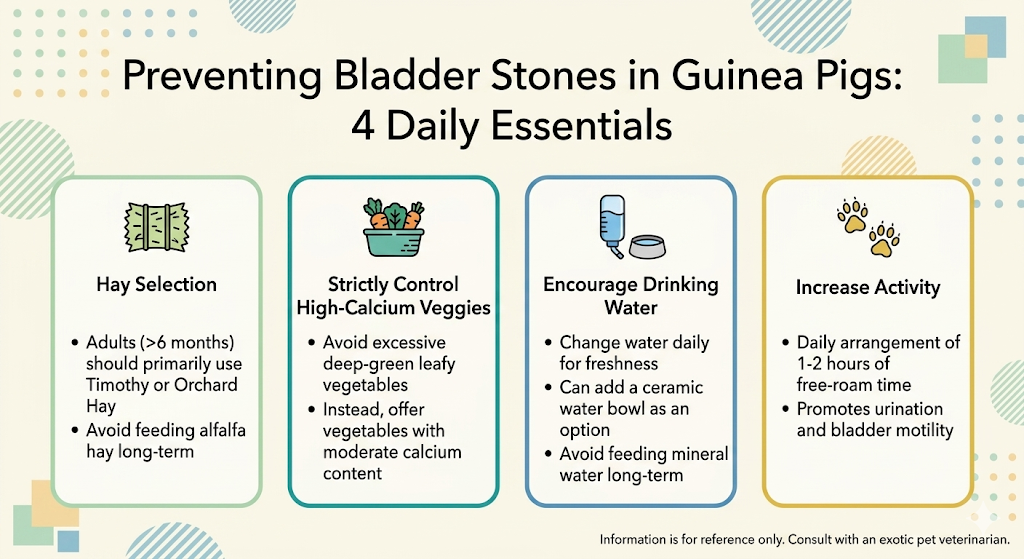
- Switch the staple hay: Guinea pigs over 6 months old should use Timothy Hay or Orchard Grass as their staple food. These hays have lower calcium content and are suitable for long-term consumption.
- Strictly control high-calcium vegetables: Avoid overfeeding dark green vegetables (such as broccoli, spinach, and Chinese kale), and switch to providing vegetables with high water content and moderate calcium levels (such as bell peppers and romaine lettuce).
- Encourage drinking water: Change clean filtered water or boiled water daily. If the guinea pig dislikes using a sipper water bottle, a heavy ceramic water bowl can be provided additionally, as many guinea pigs prefer drinking from a bowl.
- Increase activity time: Arrange at least 1-2 hours of “floor time” daily, allowing them to run around on safe, non-slip flooring to promote bladder motility and urination.
Frequently Asked Questions
Is it healthiest for a guinea pig to have absolutely no white urine?
No. It is a normal calcium excretion mechanism for a guinea pig’s urine to be slightly cloudy or occasionally exhibit white powder. If a guinea pig’s urine remains completely clear like water long-term, it may inversely indicate insufficient calcium intake or an issue with the kidney’s concentration functionality. The key lies in whether the texture of the white sediment is smooth, rather than the complete absence of sediment.
If a guinea pig has hematuria, can I buy human anti-inflammatory medication on my own to feed it?
Absolutely not. Guinea pigs have severe systemic hypersensitivity reactions to many antibiotics and medications (for instance, penicillin-class drugs can destroy the beneficial bacteria in their cecum, triggering fatal enterotoxemia). Furthermore, hematuria can be caused by stone obstructions or severe infections; blindly administering medications on your own not only fails to eliminate stones but can also cause irreversible organ failure.
I heard that drinking mineral water can replenish trace elements for guinea pigs and help prevent stones, is this true?
Quite the opposite. Commercially available mineral water contains higher concentrations of minerals such as calcium and magnesium. Letting guinea pigs drink it long-term significantly increases the burden on their kidneys to excrete minerals, making it even easier to induce calcium urine and stones. It is recommended to consistently use filtered tap water or boiled water that has cooled down.
Will bladder stones recur after a guinea pig undergoes surgical removal?
Bladder stones in guinea pigs carry a notably high recurrence rate. Surgery can only clear the solid stones that have already formed. If the dietary structure is not thoroughly changed after surgery (such as continuing to feed high-calcium foods) and water intake remains insufficient, new calcium crystals will rapidly precipitate inside the bladder again. Therefore, routine post-operative follow-up examinations and long-term dietary management are indispensable.
CityVet Guinea Pig Urinary Clinic
CityVet is committed to providing outstanding comprehensive veterinary care, guided by the core values of professionalism, compassion, and trust. We aim to offer reasonable fees, introduce advanced equipment, and explain treatment options clearly to pet owners, so that every pet receives full medical support. To book a guinea pig health screening or urinary system X-ray examination, please call our Tsuen Wan branch at 2623 5500 or our Yuen Long branch at 2477 9990. Address: G/F, 186 Sha Tsui Road, Tsuen Wan / Shop 2, G/F, Fuk Shun Building, 25 Ping Wui Street, Yuen Long.
Disclaimer: This article is for general information only and does not replace professional medical diagnosis. If you have any concerns, please book a veterinary examination as soon as possible.