

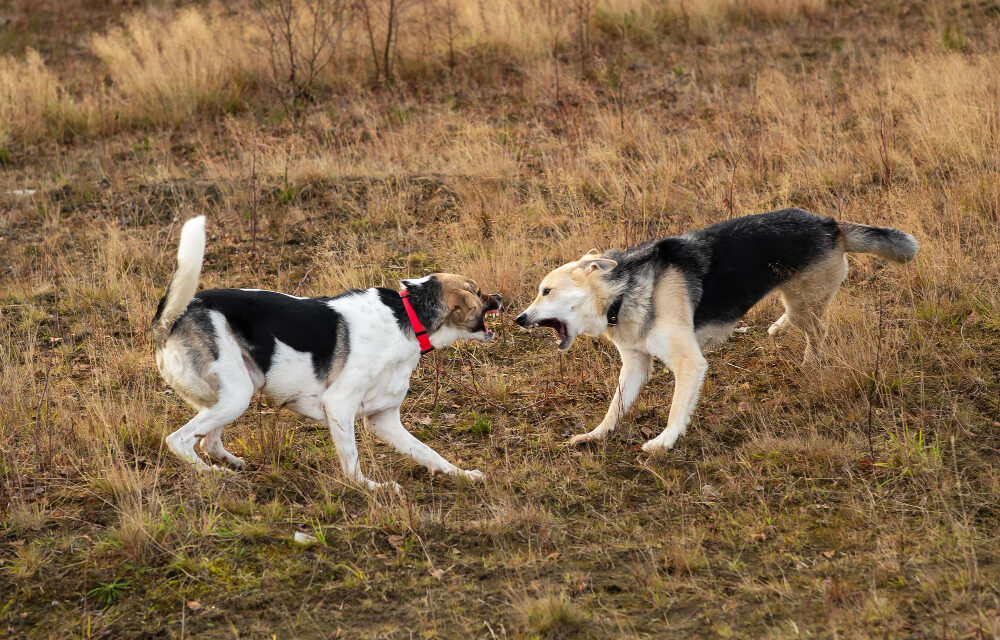
The Yuen Long Dog Attack: Two Small Dogs Fatally Attacked by a Large Dog
On August 17, 2026, a heartbreaking dog attack occurred in Yuen Long, Hong Kong. A large dog attacked two small dogs in succession, both of which later died from their severe injuries. Police earlier stated that the large dog involved weighed approximately 60 kg and was not on a leash at the time of the incident. The Agriculture, Fisheries and Conservation Department (AFCD) subsequently took the dog away and arrested the dog’s keeper the following day.
The AFCD also confirmed that the dog in question had been involved in another dog-biting incident earlier on July 10, 2026. At that time, the keeper was reminded that dogs must be securely held on a leash no longer than two meters in public places. As of August 19, 2026, the investigation into the case is still ongoing.
This “Yuen Long dog attack” incident has sparked widespread concern among pet owners. Owners of small dogs, in particular, may wonder:
What should I do if my dog is bitten by another dog? Does a lack of obvious bleeding mean there is no serious harm?
the answer is critical: You cannot judge the severity of a dog bite solely by the size of the wound on the skin’s surface.
Why Can a Dog Bite Be Severe Even With Only a Small Surface Wound?
A dog bite is fundamentally different from a regular cut.
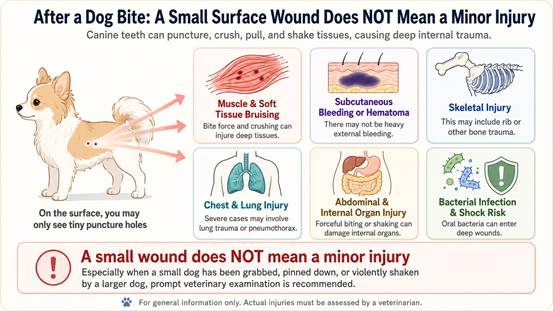
When canine teeth puncture the skin, the biting, pulling, and shaking motions can simultaneously cause crushing, tearing, and deep tissue trauma. Therefore, while you might only see one or two small puncture holes on the surface, the underlying muscles, blood vessels, chest cavity, or even internal organs may have sustained severe damage.
Veterinary literature also indicates that small surface puncture wounds can co-exist with more severe deep-seated trauma, meaning the external appearance may not accurately reflect the true extent of tissue damage.
If a smaller dog is bitten, pinned down, or shaken by a large dog, you absolutely cannot drop your guard just because “it isn’t bleeding much.”
Potential injuries caused by a dog bite include:
- Skin punctures and lacerations
- Muscle and soft tissue contusions
- Subcutaneous bleeding or hematomas
- Rib or other bone fractures
- Thoracic (chest) trauma
- Lung injuries or pneumothorax (collapsed lung)
- Abdominal and internal organ trauma
- Bacterial infections
- Pain and shock
Therefore, a small wound does not equal a minor injury.
What to Do If Your Dog is Bitten: Immediate Action Steps
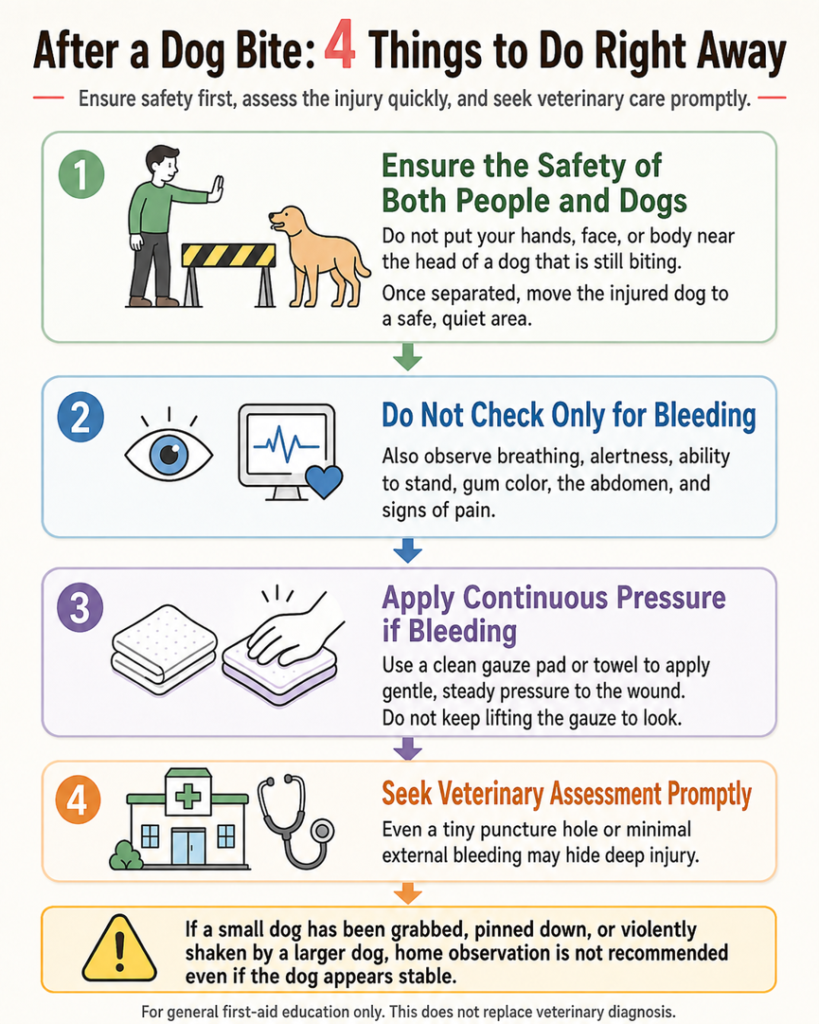
1. Ensure the Safety of Both Humans and Dogs First
If the two dogs are still conflicting, the primary goal is to prevent the situation from escalating. Do not put your hands, face, or body directly near the heads of the biting dogs. In a highly tense and agitated state, a dog may redirect its bite onto a person. Once successfully separated, immediately move the injured dog to a safe, quiet location to avoid further contact with the other dog.
2. Don’t Just Check for “Bleeding”
Many owners look for wounds first, but blood volume isn’t the only thing to watch out for in a dog bite. Quickly observe the following:
- Is breathing suddenly fast or labored?
- Is the dog abnormally quiet, weak, or collapsing?
- Is the dog unable to stand or walk normally?
- Have the gums become extremely pale?
- Is the body showing obvious signs of pain?
- Has the abdomen suddenly swollen?
- Is there continuous bleeding?
- Are there obvious puncture wounds?
- Was the dog bitten and violently shaken by the other dog?
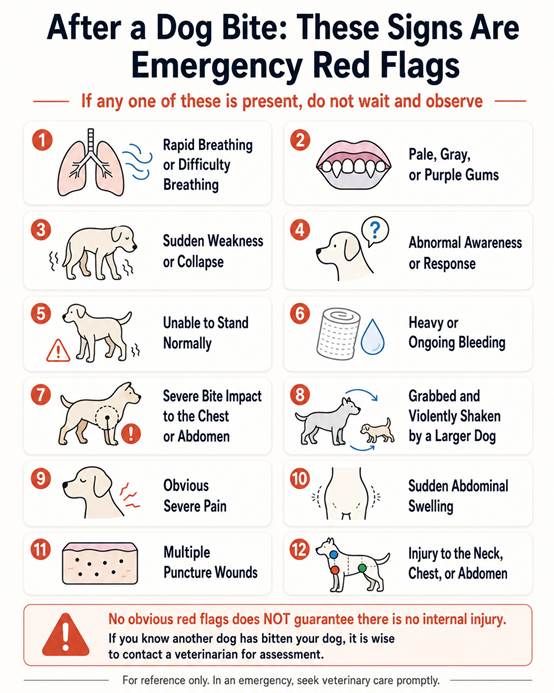
If any of these occur, consider them red flags requiring immediate veterinary examination.
3. Apply Gentle Pressure to Bleeding
If a wound is bleeding, use clean gauze or a clean towel to apply gentle, continuous pressure to the area. Do not constantly lift the gauze to check if the bleeding has stopped, as this can disrupt blood clot formation. If the bleeding is heavy, the dog’s mental state deteriorates, gums turn pale, or breathing difficulties arise, head to a veterinary clinic or pet emergency service immediately.
4. Seek Vet Assessment Even for Small Wounds
A veterinary study covering over 12,000 canine bite trauma cases showed that dog bites can include puncture wounds, blunt force trauma, or both simultaneously. Factors such as trauma severity, head injuries, or spinal injuries are tied to the prognosis. The study also found that receiving veterinary treatment before being transferred to a trauma center was associated with better survival outcomes.
In other words: Do not decide to just “observe at home for the night” because it looks like “only two tooth marks.” Especially when a small dog is bitten by a significantly larger dog, the safest approach is to have a veterinarian perform a complete assessment.
What Examinations Will the Vet Perform After a Dog Bite?
Actual examinations and treatments will vary depending on the dog’s injuries. The veterinarian will first assess the dog’s breathing, circulation, consciousness, pain levels, and overall vital signs to identify any life-threatening trauma that requires immediate intervention.
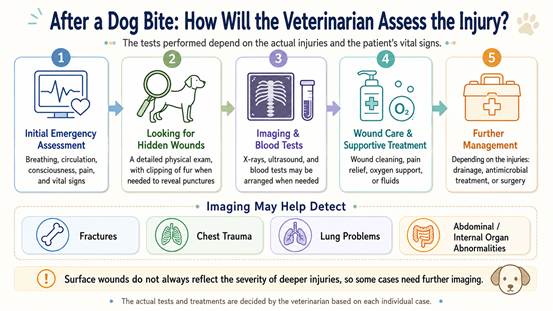
Following this, the vet may perform the following as needed:
- Detailed examination and clipping of fur to find hidden wounds
- Wound cleaning and management
- Pain relief treatment
- Blood tests
- X-ray imaging
- Ultrasound examination
- Oxygen therapy
- Intravenous (IV) fluid therapy
- Anti-infection treatment
- Wound drainage
- Surgical intervention
Severe chest trauma may involve the lungs, ribs, and intrathoracic structures, so vets often require further imaging to confirm the actual extent of the injuries.
What Constitutes a Pet Emergency?
If your dog exhibits any of the following after being attacked by another dog, do not wait and observe; seek veterinary help immediately:
- Rapid breathing, excessive panting, or difficulty breathing
- Gums that are pale, ashen, or bluish-purple
- Sudden weakness or collapse
- Abnormal consciousness or responsiveness
- Inability to stand
- Heavy or continuous bleeding
- Violent bites to the chest or abdomen
- Being violently shaken after being bitten by a large dog
- Obvious severe pain
- Sudden abdominal swelling
- Multiple puncture wounds
- Wounds located on the neck, chest, or abdomen
Even without these obvious symptoms, if you confirm a bite occurred, it is highly recommended to contact a veterinarian to let a professional judge whether immediate examination is necessary.
Do I Need to See a Vet If the Skin Isn’t Broken?
Not necessarily. When a dog bites, in addition to the puncture wound caused by the canine teeth, it can also produce a significant amount of blunt force crushing trauma. In other words, even if the skin is not visibly broken, the subcutaneous tissue, muscles, or the chest and abdomen may still be injured due to pressure. Veterinary trauma literature also notes that external wounds may not align with the severity of deep tissue injuries. If a dog has been bitten, pinned, or shaken by a large dog, it is worth getting checked even if you cannot find obvious bloody punctures.
Walking Dogs in Hong Kong: Leashes are Safety Measures, Not Just Politeness
The Yuen Long incident serves as another reminder to all dog owners that a leash is a vital safety tool for protecting your own dog, other animals, and the public.
The AFCD reiterates that dog owners must properly control their dogs at all times. According to Hong Kong regulations, “large dogs” weighing 20 kg or more must be securely held on a leash no longer than two meters in public places; furthermore, all dogs must be kept under proper control in public.
For owners, using a leash does not mean your dog is “vicious” or “disobedient.” Even generally docile dogs can exhibit behavioral changes when experiencing pain, fear, panic, resource guarding, or unfamiliar environments. The American Veterinary Medical Association (AVMA) also points out that any dog can bite, and prevention should focus on health management, proper socialization training, understanding dog body language, and using leashes in public spaces.
Preventing “Dog Fights”: What Owners Should Note When Going Out
- Keep a Safe Distance Not every dog likes interacting with strange dogs. If you see an approaching dog looking tense, overly excited, staring continuously, or stiff-bodied, or if the owner is clearly struggling to control it, proactively create distance or change your route.
- Don’t Force “Greetings” “He just wants to sniff” does not mean the other dog wants to interact. Giving a dog the space to walk away is often safer than forcing a face-to-face encounter.
- Use Proper Leashes and Harnesses Before heading out, check that the leash, clips, and harness are secure. For dogs that are large, strong, or easily stimulated, it is crucial to ensure the owner has the physical capability to control them safely.
- Seek Professional Help Early for Aggressive Behavior If your dog has a history of biting people or other dogs, suddenly chasing other animals, or showing strong aggressive reactions in specific situations, don’t just judge them by saying “they are usually very good.” First, have a vet check for underlying pain or health issues, and then seek assistance from qualified dog trainers or animal behavior professionals.
Are Large Dogs Inherently More Dangerous Than Small Dogs?
No. Size and “having a good temperament” are two different things, and no dog should be labeled dangerous purely based on its breed or size. Dogs of any size can exhibit biting behavior when frightened, in pain, threatened, or in highly stressful environments. However, when there is a significant disparity in size and strength, the trauma caused by a larger dog during a physical conflict can be devastating. Therefore, responsible leashing, management, and conflict prevention are especially critical.
Frequently Asked Questions (FAQ)
Q1: My dog was bitten once by another dog, but there is no bleeding. Do I need to see a vet?
It is recommended to at least contact a vet for an assessment. Dog bites can cause subcutaneous crushing and deep tissue trauma. A lack of heavy surface bleeding does not completely rule out internal injuries.
Q2: It’s just a tiny puncture hole. Can I just disinfect it at home myself?
A small puncture hole may just be the “entry point” of the wound, while the actual damage extends much deeper. Do not probe deeply into the wound yourself; a veterinarian should assess the wound’s depth, contamination level, and need for further treatment.
Q3: My dog is still walking and eating after being bitten. Does that mean they are fine?
Not necessarily. Some injuries may not present very obvious symptoms initially. If your dog sustained a violent bite, was shaken, or has wounds on the chest, abdomen, or neck, a prompt veterinary assessment is still advised.
Q4: How long can I wait before taking my bitten dog to the vet?
If there is difficulty breathing, heavy bleeding, weakness, collapse, pale gums, or severe pain, seek medical attention immediately. Even if your dog’s condition appears stable, prolonged delays are not recommended once a bite is confirmed.
Dog Bitten? Don’t Judge Severity Solely by Surface Wounds
The Yuen Long dog attack is deeply saddening, but it also serves as a reminder to all pet owners: After an accident, the sooner the true extent of the trauma is assessed, the better the chances of timely treatment for hidden injuries.
If your dog has just been bitten, struck, or violently shaken by another dog, even if the wound looks small, you can call CityVet first and provide us with the following details:
- Time of injury
- Location of the bite
- Approximate size of the other dog
- Whether your dog was bitten and shaken
- Whether there is bleeding
- Your dog’s current breathing and mental state
If necessary, we will advise you to bring your dog in for a veterinary examination as soon as possible.
CityVet Dog Outpatient & Check-up Services
CityVet is dedicated to providing excellent and comprehensive veterinary medical services. Upholding our core values of “Professionalism, Care, and Trust” alongside a commitment to reasonable pricing, we utilize advanced equipment and thoroughly explain all treatment options to owners, ensuring complete medical care for every pet.
Looking to book an outpatient consultation or check-up for your dog? Please call our Tsuen Wan Clinic at 2623 5500 or Yuen Long Clinic at 2477 9990. Addresses: G/F, 186 Sha Tsui Road, Tsuen Wan / Shop 2, G/F, Fook Shun Building, 25 Ping Wui Street, Yuen Long.
Disclaimer: This article provides general information only and cannot replace professional medical diagnosis. If you have any concerns regarding your pet’s health, please book a veterinary check-up as soon as possible.