

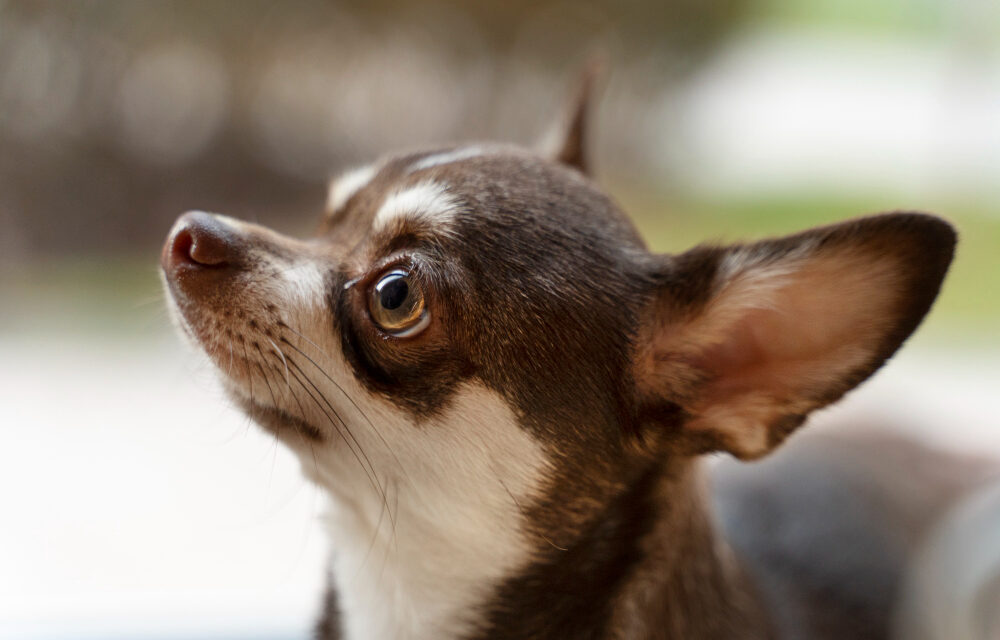
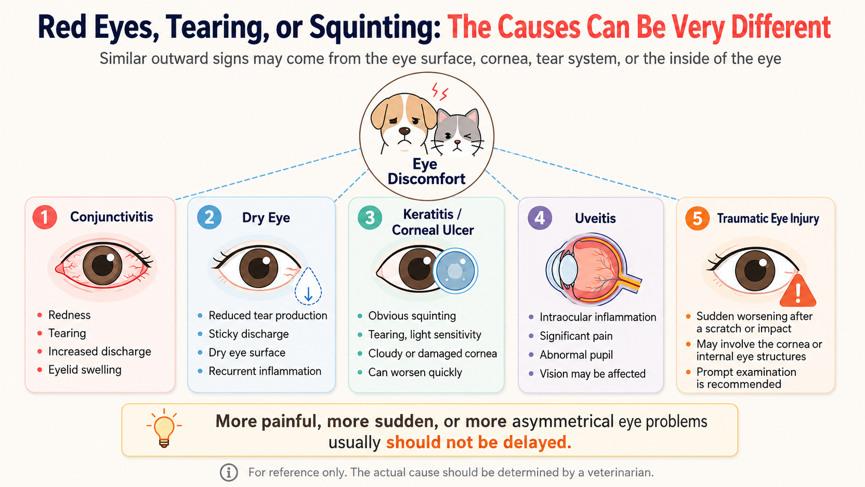
When owners notice red eyes, tearing or increased discharge in a pet, they often first assume it is only mild inflammation. The difficulty with eye problems is that symptoms that look similar on the surface can have very different underlying causes. Conjunctivitis, keratitis, corneal ulcers, uveitis, dry eye and even traumatic intraocular injury can all appear as red eyes, squinting, tearing or reluctance to open the eye.
For cats and dogs, the greatest risk of eye disease is not only pain, but also the possibility that delayed treatment may affect vision or allow the condition to worsen until surgery is needed. Therefore, when an eye looks abnormal, the key question is not simply whether to use eye drops, but whether this is a situation that requires timely veterinary care.
Red eyes, tearing and squinting: why they should not be treated as minor problems
The eye is an extremely sensitive organ. Many owners notice redness, swelling and tearing, but may not be able to tell whether the problem is on the eye surface, the cornea, the tear system or inside the eyeball.
In particular, if a pet shows any of the following signs, it should not be treated as simple irritation:
- Obvious squinting
- Persistent tearing
- Sudden increase in discharge
- Reluctance or inability to open the eye
- Constantly rubbing the face or scratching the eye
- Cornea turning white, gray or cloudy
- Unequal pupil sizes
- Sudden worsening of the eye after being scratched
In eye cases, the more painful, sudden or one-sided the signs are, the less they should be delayed.
Conjunctivitis: a particularly common eye problem in cats
Conjunctivitis is one of the most common eye problems in cats, especially in kittens, multi-cat households or cats that have recently moved into a new environment. Common signs include:
- Red eyes
- Watery eyes
- Increased discharge
- Squinting
- Swollen eyelids
- Frequent blinking
Some milder cases may improve within a short time. However, if symptoms persist, discharge increases, the problem recurs, or pain and loss of appetite are present, owners should not rely only on observation at home.
Uveitis: not just ordinary red eye
Uveitis is inflammation inside the eye and is not simply a surface red-eye problem. It may be related to trauma, infection, corneal disease, immune-related problems or even systemic disease.
Common signs include:
- Red eye
- Squinting
- Obvious pain
- Cloudy cornea
- Small or abnormal pupil
- Change in eye color
- Reduced vision
Uveitis deserves special attention because it is not only an eye problem; in some cases, it may also reflect disease in other body systems. In cats, if fever, weight loss or poor energy are present at the same time, the veterinarian may also consider whether a deeper internal medicine issue is involved.
Dry eye: common in dogs but easily overlooked
Dry eye is relatively common in dogs, but many owners first notice only that there is more eye discharge or that the eyes seem persistently unclean. In fact, dry eye means insufficient tear production, which leaves the eye surface without normal protection and can lead to chronic irritation, inflammation and an increased risk of corneal ulcers.
Common signs include:
- Increased sticky discharge
- Red eye
- Dull or dry-looking eye surface
- Eye discomfort
- Recurrent inflammation
- Corneal surface becoming unclear
If dry eye is not properly managed over the long term, the cornea may develop pigmentation, scarring or even vision impairment. Therefore, a dog with increased eye discharge or eyes that are always red should not be treated as a minor problem.
Keratitis, corneal ulcers and fight-related trauma: delay can lead to blindness or even eye removal
Corneal ulcers are among the most common and most easily underestimated eye emergencies. On the surface, the pet may only appear to be tearing, squinting or sensitive to light, but the cornea may already be damaged. If the wound is deep, infection is severe or progression is rapid, vision may be affected and surgery may even be required.
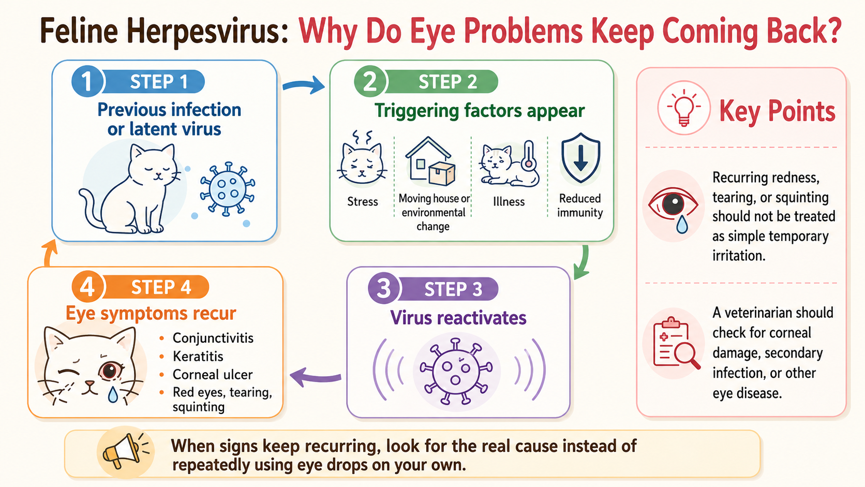
In cats, keratitis or corneal ulcers are not necessarily caused only by fight-related scratches. Feline herpesvirus is also a common cause. It can trigger repeated inflammation on the corneal surface and may become active again during stress, moving house, illness or reduced immunity. Some cats may have no obvious trauma but still develop squinting, tearing, red eyes, light sensitivity or corneal cloudiness. These cases require veterinary assessment to check whether the cornea is damaged, whether secondary infection is present, and what eye treatment plan is appropriate for the actual situation.
Another common high-risk situation is an eye injury after a cat fight. Claw scratches, penetrating injuries or severe impact can cause corneal laceration, damage to internal eye structures, bleeding or severe pain. In some cases, if the damage is too deep and the function of the eye cannot be preserved, removal of the eyeball may ultimately be required.
This is not meant to frighten owners, but to highlight that eye trauma often cannot be managed like a superficial skin scrape where owners wait and see. Whenever an eye is injured, early treatment is always safer than delay.
Recurrent eye problems and Feline herpesvirus
Feline herpesvirus is one of the important causes of recurrent eye inflammation in cats. Some cats may develop conjunctivitis, keratitis or even corneal ulcers, and signs may flare up again during stress, moving house, illness or reduced immunity. For owners, if eye problems keep recurring, they should not be regarded as occasional irritation; a veterinarian should assess the cat further.
How will the veterinarian examine an eye case?
When a pet is brought in for an eye problem, the veterinarian will usually perform different examinations according to the situation, such as:
- Basic ophthalmic examination
- Fluorescein staining of the cornea
- Tear production assessment
- Eye pressure measurement
- Pupil response examination
- Assessment for trauma or intraocular inflammation
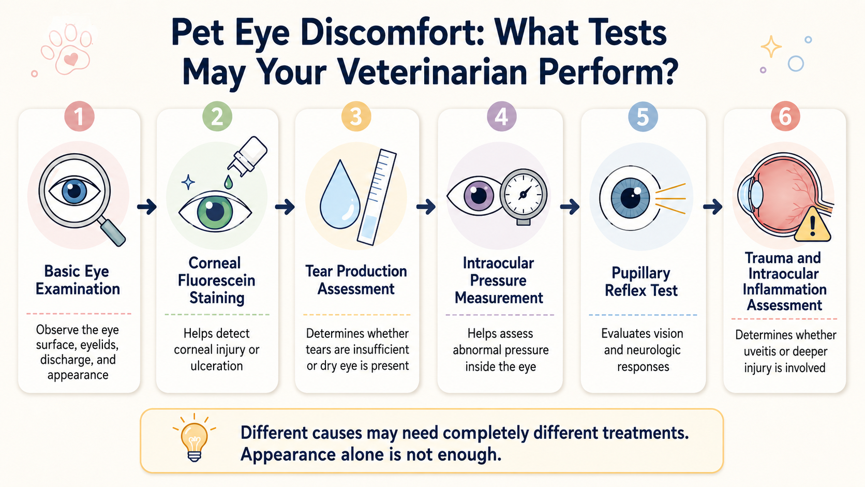
The purpose of these examinations is to distinguish whether the problem is superficial, feline herpesvirus-related keratitis, a corneal ulcer, dry eye, uveitis or a deeper ophthalmic emergency. Different causes can require very different management, so the condition cannot be estimated by appearance alone.
What situations are eye emergencies?
In the following situations, a veterinary examination should be arranged as soon as possible:
- The eye cannot be opened
- Obvious squinting or pain
- The cornea turns white, cloudy or has a wound
- Bleeding inside the eye
- Sudden eye abnormality after a scratch or impact injury
- Unequal pupil sizes
- Large increase in discharge
- The pet constantly scratches the eye or rubs the face
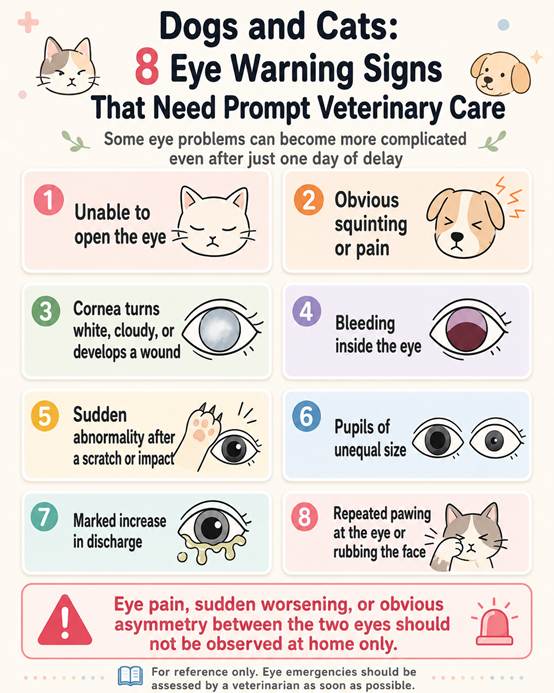
A common misconception about eye problems is to think, ‘Let’s wait one more night and see if it gets better by itself.’ However, for some corneal ulcers, trauma or intraocular inflammation, a one-day delay may already make the situation more complicated.
FAQ
Can conjunctivitis in cats resolve on its own?
If symptoms persist, discharge increases significantly, the problem recurs or pain is present, a veterinary examination is still recommended as soon as possible.
Can feline herpesvirus affect the eyes?
Yes. Some cats may develop conjunctivitis, keratitis or even corneal ulcers due to feline herpesvirus; signs may also recur during stress, illness or reduced immunity.
Are corneal ulcers in cats always caused by fighting?
Not necessarily. Fight-related scratches are one common cause, but feline herpesvirus can also lead to keratitis and corneal ulcers. If a cat repeatedly has red eyes, squinting, tearing or corneal cloudiness, it should be examined by a veterinarian.
Is excessive eye discharge in dogs always just inflammation?
Not necessarily. Dry eye can also cause increased sticky discharge, red eyes and discomfort, and a veterinarian needs to distinguish the cause.
Do corneal ulcers always require surgery?
Not necessarily. It depends on the depth, location and whether the ulcer is worsening. However, deeper cases or those with a risk of perforation may require more active treatment or even surgery.
CityVet Eye Examination
CityVet is committed to providing excellent and comprehensive veterinary medical services. Guided by the core values of professionalism, compassion and trust, and with a commitment to reasonable fees, CityVet introduces advanced equipment and explains each treatment option clearly to pet owners, providing comprehensive medical care for every pet.
To book an eye examination appointment, please call the Tsuen Wan branch at 2623 5500 or the Yuen Long branch at 2477 9990. Addresses: G/F, 186 Sha Tsui Road, Tsuen Wan / Shop 2, G/F, Fuk Shun Building, 25 Ping Wui Street, Yuen Long.
Disclaimer
This article is for general information only and cannot replace professional medical diagnosis. If you have any concerns, please schedule a veterinary examination as soon as possible.