
Many owners may unexpectedly notice thinning fur, redness, scabs or sores on the soles of a rabbit’s hind feet while trimming nails or grooming. This may be a common skin and weight-bearing condition in rabbits: pododermatitis, commonly known as sore hocks. Because rabbits do not have paw pads, they rely on a thick layer of fur to cushion their body weight. Once this protective barrier is damaged, pressure and bacterial infection can easily develop. This article explains the causes of rabbit pododermatitis, clinical grading, and veterinary treatment and home-care methods.
What Is Rabbit Pododermatitis?
Rabbit pododermatitis refers to inflammation, ulceration or even deep tissue infection affecting the skin of the feet, especially the heel area of the hind feet. Rabbits have very special anatomy: unlike cats and dogs, they do not have thick paw pads, and only fur and thin skin separate the foot bones from the ground. When the soles are exposed to abnormal pressure or friction over time, the fur gradually wears away, leading to redness, broken skin and secondary bacterial infection.
Common Causes and Risk Factors of Rabbit Pododermatitis
Pododermatitis is usually not caused by a single factor, but by a combination of environmental and physical factors:
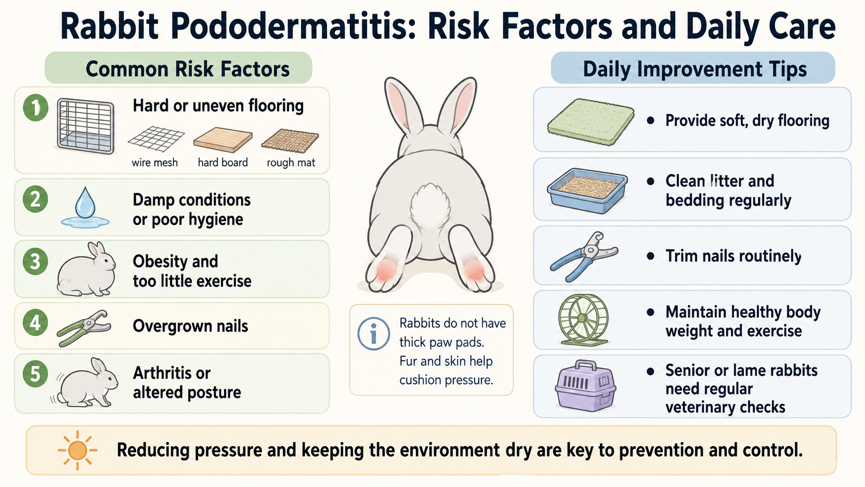
- Hard or uneven flooring: Long-term standing on wire mesh, hard wooden boards without soft padding, or rough carpet can create concentrated pressure points on the feet.
- Damp or unhygienic living conditions: A damp cage or accumulated urine and feces can soften the foot fur, thin the skin and create an ideal environment for bacterial growth.
- Obesity and lack of exercise: Excess body weight places additional stress on the feet; insufficient activity also means the rabbit may press on the same heel areas for long periods.
- Overgrown nails: Nails that are too long alter the angle at which the foot contacts the ground, shifting too much body weight backward onto the heels.
- Disease or arthritis: Older rabbits with spinal problems or arthritis may change their standing posture because of pain, increasing the risk of pododermatitis.
Symptoms and Grading of Rabbit Pododermatitis
Early detection usually gives a better treatment outcome. Clinically, pododermatitis can be divided into the following levels of severity:
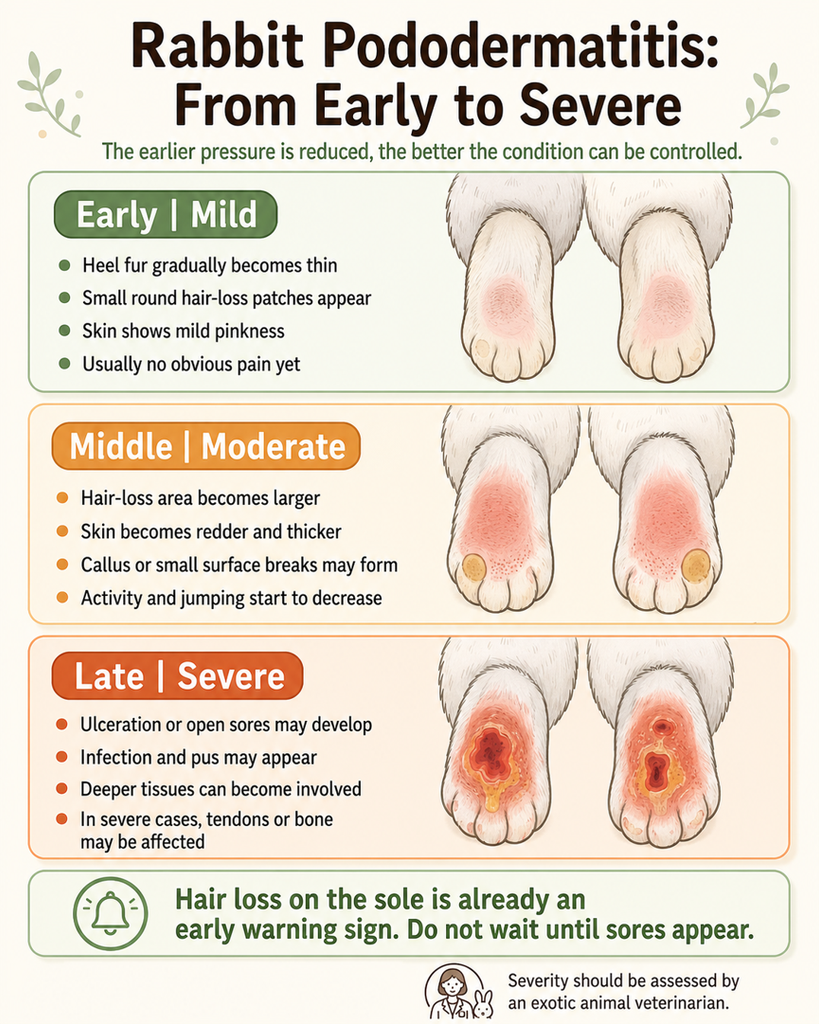
- Early stage (mild): Thinning fur or circular hair loss at the heel, mild skin redness and no obvious signs of pain.
- Middle stage (moderate): The hairless area enlarges, the skin becomes clearly red, swollen, inflamed or thickened, and calluses or small breaks in the skin may appear. The rabbit may start to jump less frequently.
- Late stage (severe): The skin breaks down into ulcers, bleeding or pus-filled sores, forming an open wound. Bacteria may invade deeper tissues, causing tendon inflammation or even osteomyelitis. At this stage, rabbits may become extremely withdrawn and lose their appetite because of severe pain.
Veterinary Diagnosis and Professional Treatment
If you notice abnormalities on your rabbit’s feet, take your rabbit to an exotic pet veterinary clinic promptly:
- Professional diagnosis: The veterinarian will carefully assess the depth of the wound, palpate the joints, and, where necessary, perform X-rays to check whether the bones have been affected by bacterial invasion. Samples may also be collected for bacterial culture.
- Wound debridement and bandaging: Necrotic tissue and pus are removed, and special pressure-relieving padding may be used for professional bandaging to reduce pressure on the wound.
- Medication: Depending on the level of infection, oral antibiotics, pain relief, anti-inflammatory medication and topical treatments may be prescribed.
- Correcting the underlying causes: The veterinarian will assess the rabbit’s weight, nail length and diet, and provide comprehensive health and husbandry recommendations.
Home Care and Prevention Tips
- Provide comfortable flooring: Place soft mats, thick towels or high-quality memory-foam pads in the rabbit’s activity area, and avoid exposed wire flooring.
- Keep the environment dry: Clean litter trays and bedding regularly to make sure the rabbit’s feet do not remain in contact with damp urine.
- Trim nails regularly: Trim nails every 4 to 6 weeks to maintain a correct foot posture.
- Control body weight: Provide plenty of high-fiber Timothy hay, reduce high-calorie treats and encourage moderate exercise.
Frequently Asked Questions (FAQ)
Q: My rabbit has slight hair loss on the feet but no redness. Does it need to see a vet?
A: This is an early warning sign of pododermatitis. It may not require emergency medication immediately, but it is advisable to consult an exotic pet veterinarian, review the environment and improve the flooring and nail care promptly to prevent worsening.
Q: Can I buy human antiseptic solution or ointment and apply it to my rabbit’s feet?
A: Do not self-medicate. Rabbits groom and lick their feet; many human antiseptics or ointments can disrupt gut flora or cause toxicity if ingested.
Q: Can I bandage my rabbit’s feet at home?
A: Home bandaging is not recommended. A bandage that is too tight can cut off the blood supply and cause tissue necrosis; a bandage that is too loose can fall off or be chewed and swallowed, causing intestinal obstruction. Bandaging should be handled by a veterinarian.
Q: Can rabbit pododermatitis be completely cured?
A: If detected early and combined with environmental improvements, the skin can heal completely. However, if underlying causes such as flooring or body weight are not corrected, pododermatitis can recur very easily.
Q: Can guinea pigs also develop pododermatitis?
A: Yes. Guinea pigs also lack thick paw pads and are very prone to pododermatitis when kept on hard mesh flooring or when overweight.
CityVet Rabbit Consultation
CityVet is committed to delivering excellent, comprehensive veterinary medical services. Guided by the core values of professionalism, care and trust, we provide reasonable fees, introduce advanced equipment, and explain treatment options clearly to pet owners, offering comprehensive medical care for every pet. Want to book a rabbit consultation? Please call our Tsuen Wan clinic at 2623 5500 or our Yuen Long clinic at 2477 9990. Address: G/F, 186 Sha Tsui Road, Tsuen Wan / Shop 2, G/F, Fook Shun House, 25 Ping Wui Street, Yuen Long.
Disclaimer: This article provides general information only and cannot replace professional medical diagnosis. If you have any concerns, please book a veterinary consultation as soon as possible.