
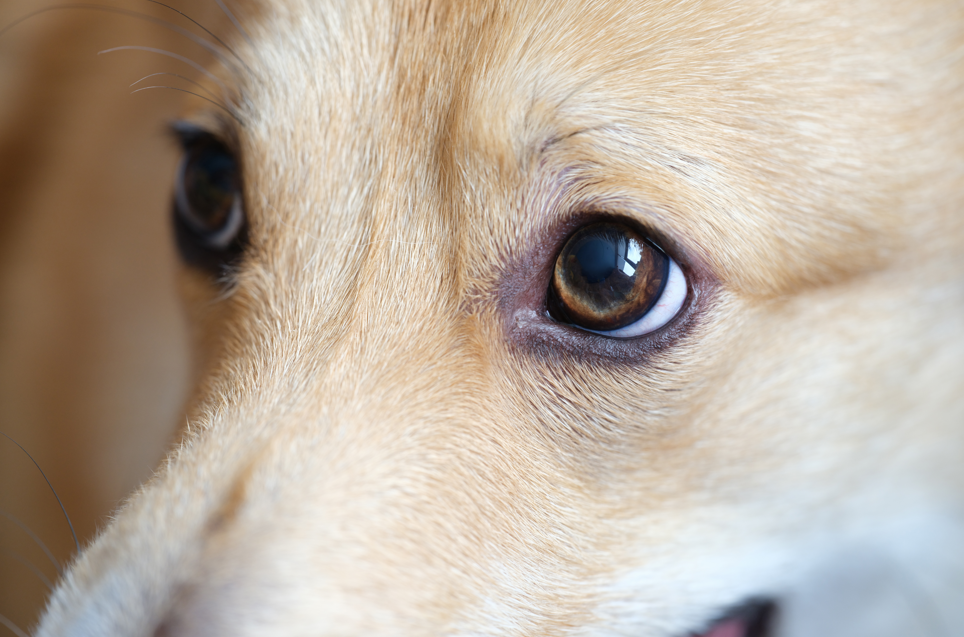
When owners discover that their beloved dog’s eyes are no longer as clear as before, or even appear grayish-white or cloudy, it is inevitable to feel anxious. In Hong Kong, with the extending life expectancy of pets, geriatric illnesses are becoming increasingly common, and canine cataracts are a subject many owners must face. However, cloudy eyes do not necessarily equate to cataracts. Only through a professional pet ophthalmic examination can we accurately evaluate a dog’s vision health and implement an appropriate treatment plan.
What are Canine Cataracts?
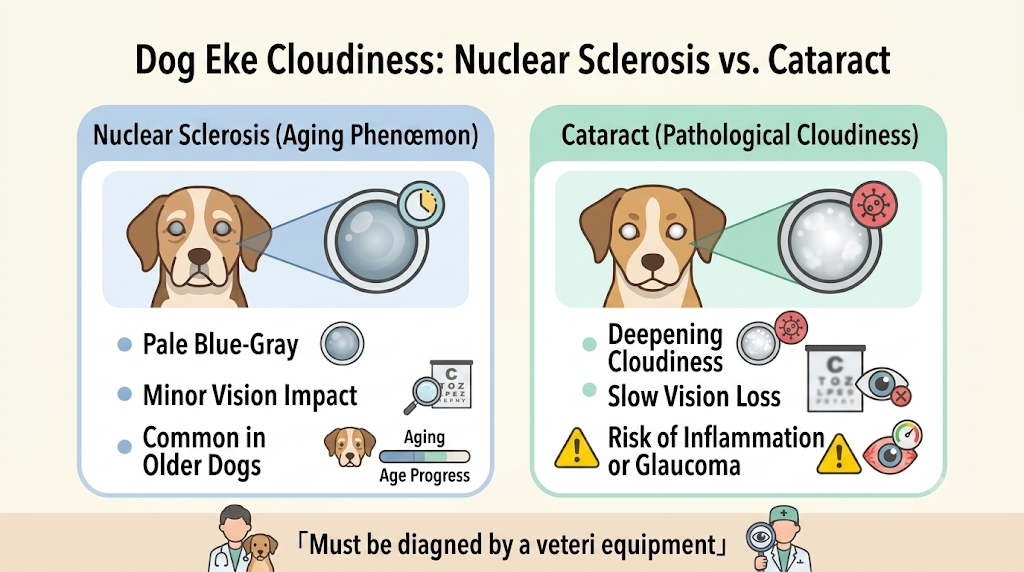
A cataract refers to the “lens” inside the eyeball changing from transparent to cloudy. The primary function of the lens is to focus light onto the retina, allowing clear images to be seen. When the protein structure within the lens alters, light can no longer penetrate normally, resulting in impaired vision.
Many owners confuse “cataracts” with “nuclear sclerosis.” Nuclear sclerosis is a natural aging phenomenon in dogs, typically occurring in canines over 7 years old, where the eyes present a faint bluish-gray or milky-white hue, but it generally does not severely impact vision. Cataracts, on the other hand, are pathological changes; if left unmanaged, the degree of cloudiness will gradually deepen, ultimately potentially leading to blindness.
Common Causes of Canine Cataracts
The reasons dogs develop cataracts are diverse, and it is not an illness unique to senior dogs. Understanding the causes helps owners heighten their alertness:
- Genetic factors: This is the most common cause. Certain dog breeds (such as Poodles, Cocker Spaniels, Golden Retrievers, etc.) have a congenital genetic predisposition and may even develop cataracts at a young age.
- Diabetes: In dogs with diabetes, the glucose level within the lens rises, causing water to enter the lens, which leads to swelling and protein denaturation. Diabetes-induced cataracts typically progress extremely rapidly.
- Aging: As age increases, the metabolic capacity of the lens declines, and the likelihood of developing degenerative cataracts increases accordingly.
- Ocular trauma: External impacts, puncture wounds, or chemical injuries to the eye can also damage the structure of the lens.
- Intraocular inflammation: Long-term intraocular inflammation, such as uveitis, can also lead to secondary cataracts if not properly treated.
Early and Late Symptoms of Canine Cataracts
Cataracts are typically progressive, and early symptoms may not be easily detected. Owners should observe the following details in their daily lives:
- Changes in eye appearance: A grayish-white, bluish-white, or opaque cloudy film appears in the position of the pupil.
- Vision decline: Hesitation when moving in dimly lit environments, or easily bumping into furniture in unfamiliar areas.
- Behavioral changes: The dog may become hesitant to go up and down stairs, or show slower reflexes when fetching toys.
- Rubbing eyes: If the cataract is accompanied by intraocular inflammation, the dog may feel discomfort and frequently rub its eyes.
- Photophobia: Sensitivity to bright light.
When a cataract reaches the mature stage, the pupil will appear completely white. At this point, the dog’s vision is severely disrupted, and they can only perceive changes in light and shadow.
Professional Pet Ophthalmic Examination Methods
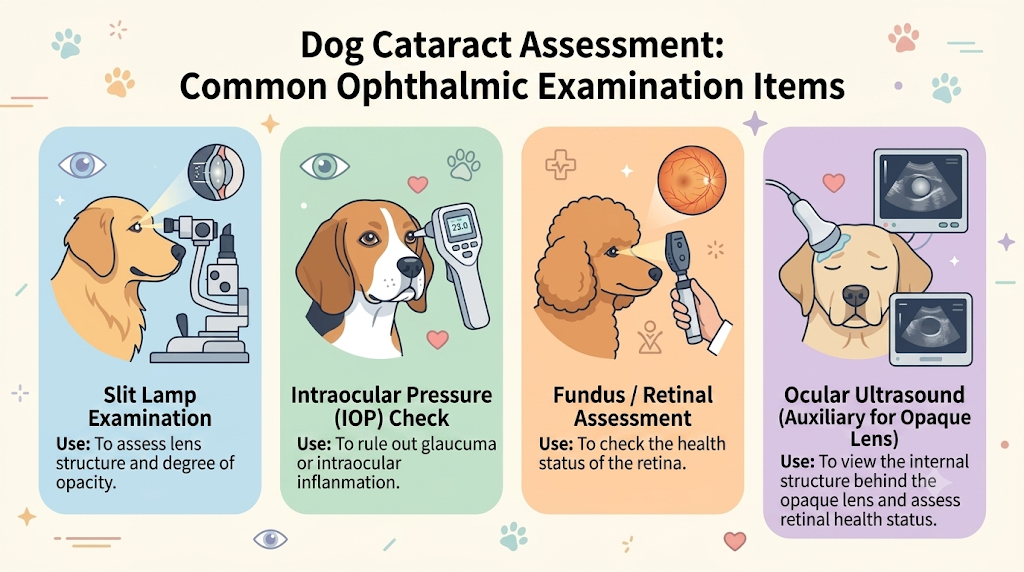
Because visual observation alone makes it difficult to differentiate nuclear sclerosis from cataracts, veterinarians utilize professional equipment to perform in-depth ophthalmic diagnostics to formulate a precise treatment plan.
Slit Lamp Examination
Veterinarians use a slit lamp to observe the layered structure of the lens, clearly identifying where the cloudiness occurs (such as the cortex, nucleus, or subcapsular region), which is crucial for distinguishing the stages of a cataract.
Fundus Examination and Retinal Function Assessment
Prior to cataract surgery, the veterinarian must confirm whether the retina is healthy. If the retina has already atrophied, vision cannot be restored even if the cataract is removed.
Tonometry (Intraocular Pressure Test)
Cataracts can be complicated by glaucoma or lens-induced uveitis. Tonometry monitors the pressure inside the eyeball, preventing complications from causing irreversible optic nerve damage.
Ocular Ultrasound
When the lens is too cloudy to allow a clear view of the fundus, the veterinarian will use ultrasound to examine the structures behind the eyeball to ensure there is no retinal detachment or tumor.
Treatment Directions and Daily Care Recommendations
Currently, surgery is the only effective method to remove cataracts and restore vision. Phacoemulsification (cataract ultrasound emulsification surgery) is the mainstream treatment plan, where the veterinarian removes the cloudy lens and implants an artificial intraocular lens.
If a dog is unsuited for surgery due to health conditions or age, the veterinarian will adopt conservative management, using eye drops to control intraocular inflammation and monitoring intraocular pressure. Although this cannot reverse the cloudiness, it reduces the dog’s pain and discomfort.
Daily care tips:
- Keep the environment fixed: Avoid frequently changing the arrangement of furniture at home, making it easier for vision-impaired dogs to move around using their memory.
- Sun protection: Intense ultraviolet rays can accelerate lens aging. Try to choose shaded areas during outdoor activities.
- Control blood sugar: For diabetic dogs, strict blood sugar control is the key to preventing the worsening of cataracts.
- Regular follow-ups: The annual comprehensive health checkup should include an ophthalmic evaluation.
When to Seek Veterinary Assistance?
If you find your dog’s eyes showing any cloudiness, redness, increased discharge, or if there are apparent visual impairments in their behavior, it is recommended to book a professional examination as soon as possible. Early detection of cataracts not only offers more treatment options but also effectively prevents painful complications such as glaucoma.
At CityVet, we understand how much every owner values their pet’s health. Our veterinarians provide detailed medical explanations to ensure you select the most suitable care plan for your beloved dog with a full understanding.
Frequently Asked Questions
Is a dog’s cloudy eye definitely a cataract?
Not necessarily. Senior dogs frequently develop “nuclear sclerosis,” which is a natural change in lens density. The eyes look faintly bluish-gray, but the impact on vision is minimal. Additionally, corneal ulcers, corneal edema, or uveitis can also cause cloudy eyes. Therefore, a diagnosis must be confirmed through an examination by a veterinarian using professional equipment.
Can cataracts be cured with eye drops?
Currently, there are no eye drops or medications in medicine that can completely cure or eliminate a cataract once it has formed. Medications are typically used to control intraocular inflammation (uveitis) caused by cataracts or concurrent glaucoma. To restore vision, surgical removal of the cloudy lens is currently the only method proven effective.
Is cataract surgery dangerous for an older dog?
The risk of surgery depends primarily on the dog’s overall health status and anesthetic tolerance, rather than age alone. Prior to surgery, the veterinarian will conduct a detailed physical examination, blood tests, and cardiac and pulmonary assessments. For senior dogs with a stable health condition, the success rate of cataract surgery and the improvement in quality of life are usually highly significant.
What happens if a dog’s cataracts are left untreated?
If cataracts are allowed to progress without intervention, apart from vision loss, they can also trigger severe complications, such as lens-induced uveitis (intense intraocular inflammation) and secondary glaucoma (elevated intraocular pressure). These complications lead to distinct pain and may even necessitate the enucleation of the entire eyeball.
CityVet Pet Eye Examination
CityVet is committed to providing outstanding comprehensive veterinary care, guided by the core values of professionalism, compassion, and trust. We aim to offer reasonable fees, introduce advanced equipment, and explain treatment options clearly to pet owners, so that every pet receives full medical support. To book a pet eye examination consultation, please call our Tsuen Wan branch at 2623 5500 or our Yuen Long branch at 2477 9990. Address: G/F, 186 Sha Tsui Road, Tsuen Wan / Shop 2, G/F, Fuk Shun Building, 25 Ping Wui Street, Yuen Long.
Disclaimer
This article is for general information only and does not replace professional medical diagnosis. If you have any concerns, please book a veterinary examination as soon as possible.