

FPV (Feline Panleukopenia Virus / Feline Distemper) | A Must-Read Guide on Symptoms, Prevention, and Veterinary Care for Hong Kong Cat Owners
For many cat owners, when a kitten exhibits vomiting, diarrhea, or lethargy, their immediate assumption is often that it is just simple gastrointestinal upset. In reality, however, these symptoms can also be related to Feline Panleukopenia Virus (FPV). FPV, commonly known as “feline distemper,” is a highly contagious viral disease that primarily impacts kittens, cats with incomplete vaccination schedules, and individuals with insufficient immune protection.
In recent years, many owners have brought new cats home through various channels, such as online matching, rehoming from friends, or even cross-border purchases. Under these circumstances, owners are frequently told that the cat is “fully vaccinated.” However, whether the actual vaccination records are complete, the immunization schedule is truly finished, and adequate protection has been established cannot be verified by verbal confirmation alone. For this very reason, feline distemper remains a critical possibility that cannot be ignored when a kitten falls ill.
What is FPV? Why Are Kittens at Such High Risk?
FPV is a common feline infectious disease that can deteriorate rapidly. It primarily attacks the intestinal tract and the immune system; consequently, infected cats frequently experience concurrent gastrointestinal symptoms and a drop in white blood cell counts. When white blood cells decrease and the body’s defenses are compromised, the condition can worsen within a brief timeframe. Kittens are exceptionally vulnerable, not merely due to their young age, but because their immune protection is still developing. Even if they have received vaccinations, there remains a risk of infection as long as the entire kitten vaccination series is incomplete, or if there is a gap between the timing of the injection and the actual establishment of immunity. This is precisely why, in clinical settings, veterinarians exercise extreme caution to rule out feline distemper when treating gastroenteritis in kittens.
Common Symptoms of Feline Distemper: More Than Just Vomiting and Diarrhea Common symptoms of FPV include:
- Lethargy
- Decreased appetite or complete refusal to eat
- Persistent vomiting
- Diarrhea
- Dehydration
- Fever or abnormal body temperature
- Rapid decline in physical strength
- Decreased responsiveness overall
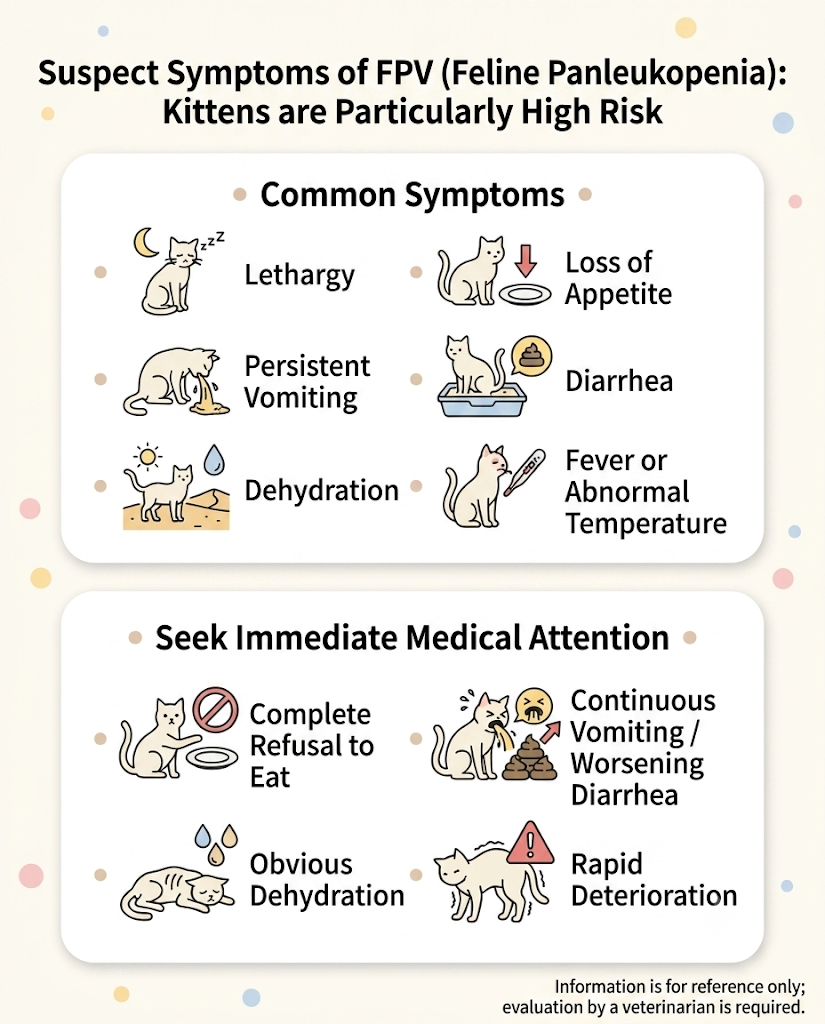
Some cases may initially appear to be standard gastroenteritis. However, if the patient is a kitten, has an unknown background, is incompletely vaccinated, or exhibits exceptionally rapid symptom progression, a high level of alertness is warranted.
Why Can a Cat Still Contract Feline Distemper After Vaccination?
This is one of the most frequent questions asked by owners. Clinically, “having a history of vaccination” does not automatically equate to “having established sufficient immunity.”
Incomplete Vaccination Records
If there is only a verbal claim without clear documentation of the vaccine name, administration date, batch number, or veterinary records, it is very difficult for owners to determine whether the immunization series was genuinely completed. Extra caution must be exercised regarding kittens of unknown origin or those brought into Hong Kong via cross-border routes.
Incomplete Immune Establishment
Kitten core vaccines generally require multi-dose administration at specific intervals. If only one dose has been given, or if the time elapsed since completion is short, the immune system may not have built up sufficient protection. Under these circumstances, infection remains possible despite being superficially “vaccinated.”
Impact of Maternal Antibodies
In their early weeks, kittens are influenced by maternal antibodies. While maternal antibodies provide initial baseline protection, they can simultaneously interfere with the vaccine response. Consequently, the kitten vaccination protocol demands full completion rather than just one or two random doses.
How Do Veterinarians Diagnose FPV?
When feline distemper is suspected, veterinarians typically formulate a diagnosis based on a comprehensive evaluation of several aspects, including:
- Medical history
- Age and vaccination status
- Clinical signs
- Blood tests
- In-clinic rapid tests
- Dehydration and overall circulatory status
Among these, a drop in white blood cell counts is a critical warning sign. If the rapid test results do not entirely align with the clinical presentation, the veterinarian may recommend further testing or a re-evaluation rather than relying solely on a single result to make a definitive conclusion.
Treatment Approaches and Hospitalization
Support Currently, the management of FPV focuses primarily on supportive therapy and close monitoring. Common therapeutic directions include:
- Fluid therapy
- Antiemetics
- Electrolyte correction
- Nutritional support
- Managing secondary infections as appropriate
- Isolation care
- Hospitalized observation
Because the condition can shift drastically within a short period, some cats require hospitalization for continuous monitoring of their mental state, body temperature, blood parameters, and food intake. Early intervention is particularly crucial for younger patients, or cases involving severe dehydration and persistent vomiting.
How Can Hong Kong Cat Owners Reduce Risks?
The most practical preventive steps include:
- Completing the core vaccination schedule on time
- Verifying the vaccination records of new cats
- Quarantining and observing new cats upon arrival
- Avoiding premature exposure of incompletely vaccinated kittens to high-risk environments
- Monitoring changes in diet, energy levels, and defecation
- Seeking immediate medical attention if recurrent vomiting or diarrhea occurs
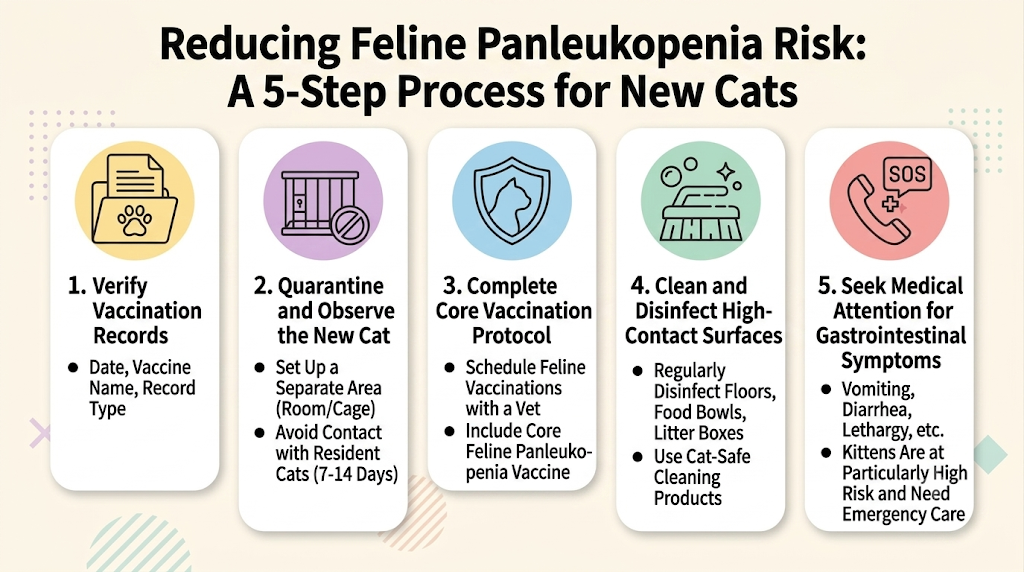
For many owners, the risk often does not stem from a complete lack of care, but rather from easily trusting surface-level information, such as “already vaccinated,” “energetic,” or “just adapting to a new diet.” For kittens, however, the disease can progress very quickly, and a delay of a few hours can sometimes significantly impact the prognosis.
When to See a Veterinarian Immediately?
If your cat exhibits any of the following signs, it is recommended to arrange a veterinary examination as soon as possible:
- Persistent vomiting
- Worsening diarrhea
- Complete refusal to eat
- Lethargy, remaining stationary for long periods
- Dehydration
- Abnormal body temperature
- Apparent rapid deterioration of symptoms within a short window
Prompt action is critical, and delays must be avoided, especially for kittens, cats with incomplete vaccination status, or newly adopted cats who have just arrived home.
FAQ
Is FPV the same as feline distemper?
Yes. FPV stands for Feline Panleukopenia Virus, which is more commonly referred to as feline distemper in everyday terms.
Do indoor cats also need to be vaccinated against feline distemper?
Yes. Feline distemper falls under core vaccinations. Even indoor cats run the risk of exposure to the pathogen via humans, objects, or environmental contact.
Is a kitten safe after receiving just one dose of the vaccine?
Not necessarily. Kittens typically need to complete the entire vaccination series to establish comprehensive immune protection.
Can feline distemper be monitored at home instead of visiting a clinic?
If the discomfort is mild, you can contact a veterinarian first; however, if a kitten is experiencing vomiting, diarrhea, or lethargy, self-monitoring at home is not recommended.
Does feline distemper treatment always require hospitalization?
Not necessarily, as it depends on the severity of the illness. However, if there is evident dehydration, recurrent vomiting, a complete loss of appetite, or a poor overall condition, hospitalization is highly beneficial for stabilizing the patient and monitoring changes.
CityVet FPV Assessment Clinic
CityVet is committed to providing outstanding comprehensive veterinary care, guided by the core values of professionalism, compassion, and trust. We aim to offer reasonable fees, introduce advanced equipment, and explain treatment options clearly to pet owners, so that every pet receives full medical support. To book an FPV / feline distemper assessment consultation, please call our Tsuen Wan branch at 2623 5500 or our Yuen Long branch at 2477 9990. Address: G/F, 186 Sha Tsui Road, Tsuen Wan / Shop 2, G/F, Fuk Shun Building, 25 Ping Wui Street, Yuen Long.
Disclaimer
This article is for general information only and does not replace professional medical diagnosis. If you have any concerns, please book a veterinary examination as soon as possible.