

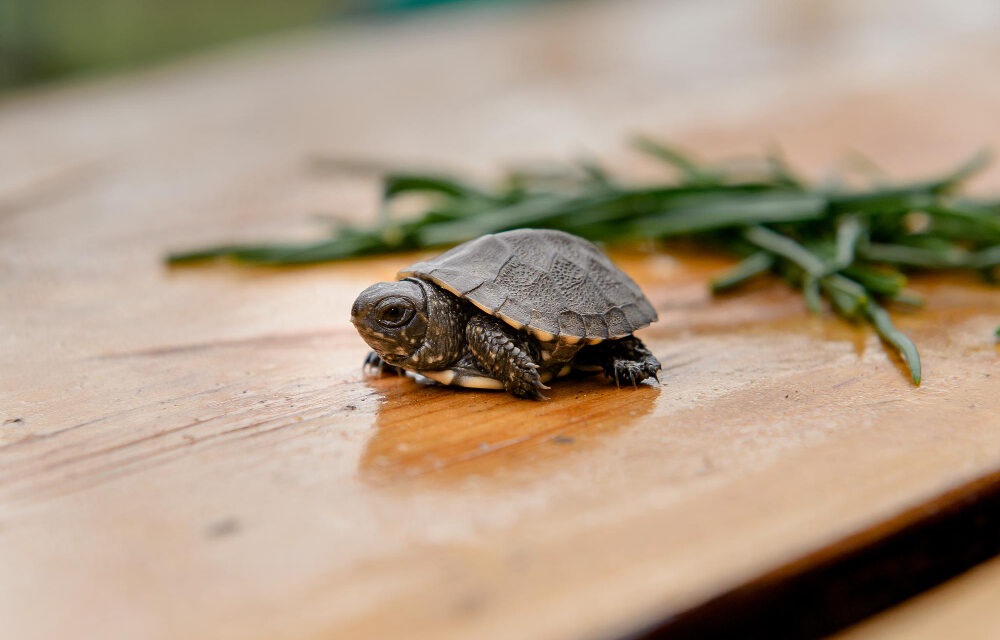
Whenever Hong Kong enters autumn and winter and the temperature drops, many turtle owners notice that their pets become less active, hide in corners for long periods, or even stop eating completely. Is reduced appetite in winter a normal natural response to low temperature, or does it indicate serious organ disease? Many owners mistakenly assume that their turtle is preparing to hibernate and delay veterinary care, often missing the treatment window for serious diseases such as renal failure or pneumonia. This article explains how to distinguish low-temperature response from potentially fatal disease.
The Reality of Ectotherms: How Temperature Affects Turtle Appetite
Turtles are ectothermic animals. Their body temperature, metabolic rate and digestive enzyme activity depend completely on the external environment:
- Preferred optimal temperature zone (POTZ): Most tropical and subtropical turtles require an environmental temperature of 28°C to 32°C to maintain normal digestion and immune function.
- Low-temperature physiological slowdown: When environmental temperature drops below 20°C, gut motility slows markedly and digestive enzymes lose activity. At this point, turtles naturally reduce food intake to prevent food remaining in the intestine and fermenting.
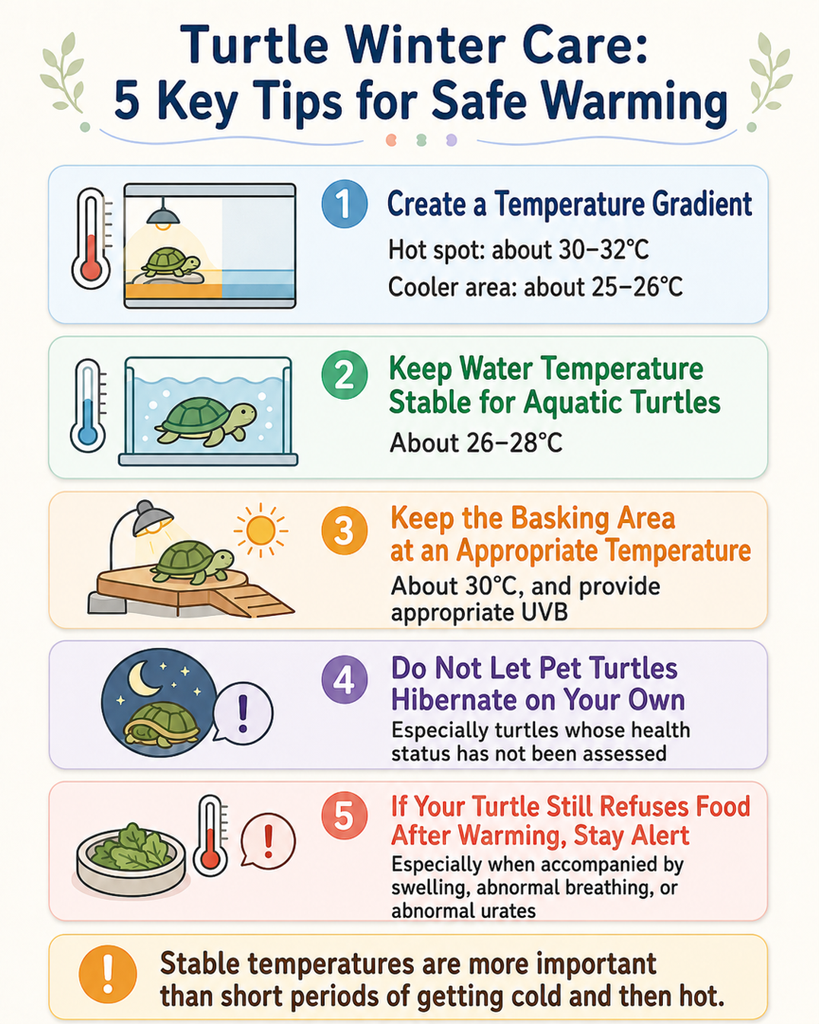
Pet Turtles Should Not Be Allowed to Hibernate Casually
In the wild, some temperate turtle species survive winter through hibernation. However, pet turtles under human care should not be placed into hibernation casually:
- Risk of insufficient body reserves: If undigested food remains in the gut before hibernation, or if the turtle is underweight and lacks fat reserves, intestinal infection or organ failure during hibernation can be fatal.
- Masking disease: Sick turtles with chronic kidney disease, parasites or respiratory infections may appear lethargic at low temperatures in a way that resembles hibernation. If owners mistake this for normal hibernation, the turtle may deteriorate unnoticed.
How to Distinguish a Low-Temperature Response from Organ Disease Warning Signs
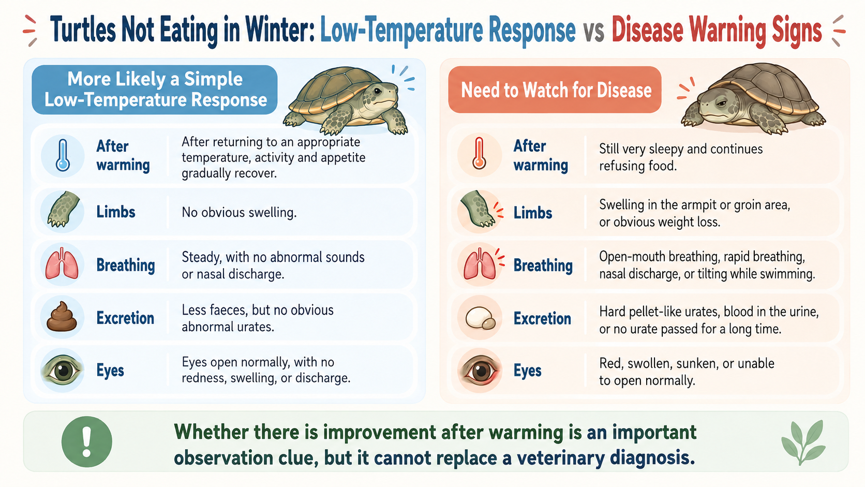
Although low temperature can reduce appetite, a simple temperature response and organ disease are fundamentally different. Owners can observe the following table:
Common Life-Threatening Diseases Behind Reduced Winter Appetite in Turtles
If the turtle still refuses food after appropriate warming, the following common diseases must be considered:
1. Turtle renal failure
Low temperature and dehydration greatly increase the burden on the kidneys. When kidney function declines, uremic toxins can cause severe nausea and stomatitis, leading to complete food refusal, often with limb swelling and abnormal urates.
2. Respiratory infection (pneumonia)
Large temperature fluctuations in late autumn and early winter can trigger pneumonia. Sick turtles may stop eating because fluid in the lungs makes breathing difficult, often with open-mouth breathing, nasal discharge or swimming tilted to one side.
3. Gastrointestinal stasis and foreign-body obstruction
Eating at low temperatures can cause food to ferment and create gas in the gastrointestinal tract, leading to severe abdominal pain and gut stasis.
Veterinary Diagnosis and Winter Care Recommendations
If a turtle still does not eat at all for more than 7 to 10 days after proper warming, seek care from an exotic pet veterinary clinic promptly:
- Professional examination: The veterinarian may perform X-rays to check for lung infection or intestinal fermentation, and blood biochemistry to assess liver and kidney function and electrolytes.
- Correct warming: Use professional reptile heat lamps and aquarium heaters to establish a stable basking spot of 30°C-32°C and a cool zone of 25°C-26°C, maintaining a stable temperature gradient.
Frequently Asked Questions (FAQ)
Q: In winter, should I place my turtle under the sun to keep it warm?
A: Winter sunlight in Hong Kong is often not warm enough, and sunlight through glass does not provide UVB. In winter, use dedicated reptile heat lamps such as night bulbs, ceramic emitters or basking bulbs to maintain a stable enclosure temperature.
Q: If a turtle completely stops eating in winter, will it starve?
A: Healthy adult turtles tolerate low temperatures better. However, if the environment is warm because a heat lamp is used and the turtle still refuses food for a long time, nutrient and water reserves will be depleted quickly, leading to liver and kidney failure.
Q: What water temperature should an aquarium heater be set to for aquatic turtles in winter?
A: Set the water heater to 26°C to 28°C, and also provide a basking platform hot spot of about 30°C to avoid a large difference between water and air temperatures.
Q: Why does my turtle still refuse food after warming?
A: This means the loss of appetite is not simply caused by temperature. The turtle may already have pneumonia, kidney disease, parasites or gastrointestinal stasis, and needs veterinary examination and treatment.
Q: What should I pay attention to when soaking a turtle in winter?
A: Soaking water should be maintained at 30°C to 32°C. Soaking should be done under a heat lamp, and the turtle should be dried with a towel immediately afterward to avoid chilling.
CityVet Turtle Consultation
CityVet is committed to delivering excellent, comprehensive veterinary medical services. Guided by the core values of professionalism, care and trust, we provide reasonable fees, introduce advanced equipment, and explain treatment options clearly to pet owners, offering comprehensive medical care for every pet. Want to book a turtle consultation? Please call our Tsuen Wan clinic at 2623 5500 or our Yuen Long clinic at 2477 9990. Address: G/F, 186 Sha Tsui Road, Tsuen Wan / Shop 2, G/F, Fook Shun House, 25 Ping Wui Street, Yuen Long.
Disclaimer: This article provides general information only and cannot replace professional medical diagnosis. If you have any concerns, please book a veterinary consultation as soon as possible.