

Is Your Turtle Floating or Floating Sideways a Sign of Illness? Common Warning Signs of Pneumonia and Gastrointestinal Problems
Floating, floating sideways, or losing balance when swimming are situations that many turtle owners encounter. Some turtles only float temporarily due to nervousness, after eating, or because they are unaccustomed to the water level. However, if persistent sideways floating, inability to submerge, lopsided swimming, open-mouthed breathing, nasal discharge, a decreased appetite, or reduced activity levels occur, it may be related to pneumonia, respiratory tract infections, gastrointestinal flatulence, or other health problems. Clinical signs in turtles are usually hidden; once obvious floating abnormalities manifest, they should be observed seriously and a checkup should be considered.
Do Turtles Normally Float?
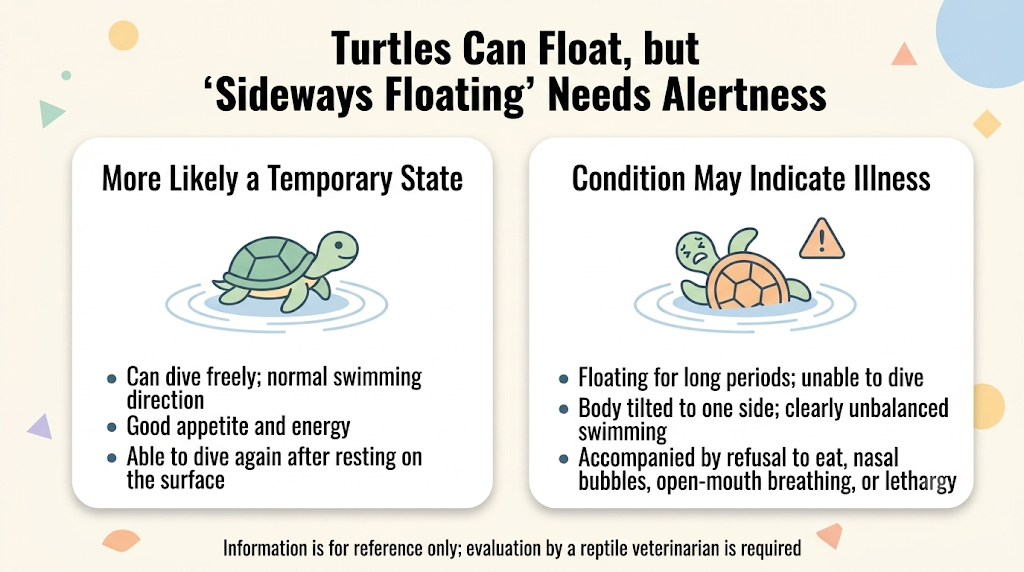
Aquatic turtles naturally swim and float on the water surface to rest, so temporary floating is not necessarily an illness. If the turtle can freely submerge, its swimming direction is normal, and its appetite and mental state are good, there is generally less cause for concern. However, if a turtle floats for an extended period, cannot submerge, tilts to one side, or is visibly unbalanced when swimming, this is usually not playfulness, but a cry for help from its body.
Sideways floating requires extra attention, because left-right imbalance may be related to lungs, buoyancy, gastrointestinal gas, or discomfort on one side of the body. Since a turtle’s lungs are located dorsally above the heart, when the lungs experience inflammation, purulent accumulation, or fluid retention, or when the digestive tract is filled with gas, the turtle’s center of gravity shifts, generating abnormal buoyancy. If these types of problems are not handled promptly, they often deteriorate rapidly.
Common Causes of Turtle Floating and Sideways Floating
Pneumonia or Respiratory Tract Infections
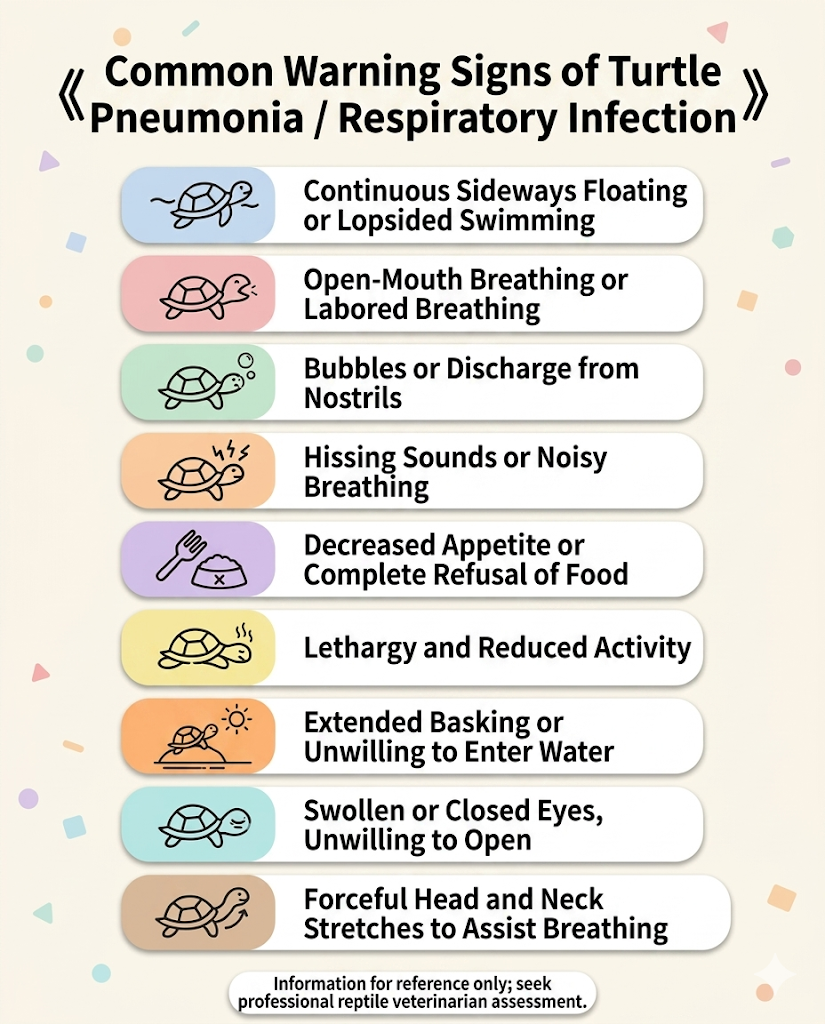
A turtle’s lungs are located on the dorsal side inside the shell. When one side of the lung is infected or accumulates secretions, it can affect buoyancy, leading to sideways floating. Common warning signs of pneumonia include open-mouthed breathing, hissing sounds, bubbles at the nostrils, nasal discharge, abnormal breathing sounds, lethargy, refusal to eat, swollen eyes, and prolonged basking.
Gastrointestinal Flatulence or Digestive Issues
Turtles may experience buoyancy abnormalities when suffering from indigestion, gastrointestinal gas accumulation, constipation, or an improper diet. Food fermenting inside the intestinal tract produces a large amount of gas, creating a “buoyancy effect.” Some turtles float temporarily, but if this is concurrently accompanied by a decreased appetite, abnormal defecation, or reduced activity, a further evaluation is required.
Trauma or Other Internal Medicine Issues
If a turtle has fallen, been bitten, or sustained an impact, it may affect its activity and buoyancy. Some internal medicine conditions can also make a turtle weak, unable to submerge normally, or unable to swim properly.
Common Symptoms of Turtle Pneumonia
Turtle pneumonia is not necessarily very obvious at the beginning. Owners should watch for the following changes:
- Persistent sideways floating or lopsided swimming;
- Open-mouthed breathing;
- Bubbles or discharge at the nostrils;
- Swollen eyes or a reluctance to open them;
- Decreased appetite or complete refusal to eat;
- Prolonged basking or reluctance to enter the water;
- Decreased activity levels;
- Head and neck forcefully extending and retracting when breathing;
- Abnormal sounds inside the shell or near the nasal cavity.
If a turtle exhibits multiple symptoms concurrently, medical attention should be sought as soon as possible.
Professional Veterinary Diagnosis and Treatment
Once floating or sideways floating phenomena are noticed in a turtle, seeking a professional veterinary examination is recommended. Veterinarians typically take the following diagnostic steps:
- Palpation and Auscultation: Checking whether the abdomen is flatulent and listening to breathing sounds for any abnormal murmurs.
- Diagnostic Imaging (X-Ray): This is the most precise method for diagnosing pneumonia and gastrointestinal obstruction, clearly revealing lung shadows and locations of intestinal gas accumulation.
- Medication: For bacterial pneumonia, the veterinarian will prescribe antibiotic injections or medicated baths; for gastrointestinal issues, they may need to adjust water temperature, provide digestion-promoting medications, or adjust the dietary structure.
How Are Turtle Floating or Pneumonia Treated?
Treatment directions must be formulated based on the examination results. If it is a respiratory tract infection or pneumonia, the veterinarian may arrange appropriate medications, heating, fluid therapy, and supportive care. If it is related to gastrointestinal issues, it may require adjustments to diet, temperature, environment, and bowel movements. If the husbandry environment is the primary trigger, improving water temperature, the basking zone, UVB, water quality, and diet is extremely critical.
Owners should not rely solely on raising water temperature for heating or dry-docking to handle all scenarios. Incorrect management can cause dehydration, increased stress, or worsening of the condition in turtles.
How to Reduce Floating and Respiratory Issues Through Daily Husbandry
Maintaining clear water quality and a constant water temperature daily (depending on the species, typically between 25-28°C is optimal) while providing balanced nutrition is essential. Turtles require a dry platform where they can completely leave the water to bask, along with appropriate UVB exposure. Water quality must be kept clean, and the filtration system and water change frequency should align with the turtle’s size and stocking density. Regarding diet, suitable food should be provided according to the species to avoid long-term lack of variety. Furthermore, regularly clearing residual food and feces inside the tank can effectively lower the bacterial load and reduce the chances of infection.
If your turtle experiences persistent sideways floating, inability to submerge, open-mouthed breathing, bubbles at the nostrils, refusal to eat, lethargy, swollen eyes, reluctance to enter the water, or a distinct decline in activity levels, an examination with a reptile veterinarian should be arranged as soon as possible.
Frequently Asked Questions
Is a turtle floating sideways definitely pneumonia?
Not necessarily, but sideways floating is a warning sign that requires serious attention. Pneumonia, gastrointestinal flatulence, constipation, buoyancy issues, or other illnesses can all cause sideways floating; a veterinary examination is recommended for confirmation.
Can pneumonia be transmitted to other turtles at home?
If it is a respiratory infection caused by bacteria or viruses, it is entirely possible to transmit it to other turtles in the same tank. Once one of them exhibits floating or nasal discharge symptoms, it should be isolated immediately, and the original tank and equipment must be thoroughly disinfected to prevent cross-infection.
Can turtle pneumonia resolve on its own?
Waiting for self-recovery is not recommended. Respiratory tract infections in turtles can progressively worsen, and early clinical signs are subtle. If open-mouthed breathing, nasal bubbles, refusal to eat, or sideways floating occur, medical attention should be sought as soon as possible.
Can raising the water temperature treat turtle floating?
An appropriate temperature supports a turtle’s metabolism and immune function, but raising the water temperature cannot replace a diagnosis. If it is an infection, pneumonia, or a severe gastrointestinal problem, relying solely on heating is often insufficient for recovery and may even delay the window for treatment. Professional medications prescribed by a veterinarian remain the core of controlling infections.
Is it normal for a turtle to stay out of the water and bask constantly?
If the turtle actively climbs onto the basking platform, or can rapidly dive to look for food after quietly floating on the water surface for a period, this is typically normal behavior. Pathological floating refers to a turtle “wanting to dive but being unable to submerge,” or its body visibly tilting to one side when stationary. You can try gently tapping the water surface; a healthy turtle will react immediately and dive to evade.
CityVet Reptile & Turtle Clinic
CityVet is committed to providing outstanding comprehensive veterinary care, guided by the core values of professionalism, compassion, and trust. We aim to offer reasonable fees, introduce advanced equipment, and explain treatment options clearly to pet owners, so that every pet receives full medical support. To book a reptile and turtle consultation, please call our Tsuen Wan branch at 2623 5500 or our Yuen Long branch at 2477 9990. Address: G/F, 186 Sha Tsui Road, Tsuen Wan / Shop 2, G/F, Fuk Shun Building, 25 Ping Wui Street, Yuen Long.
Disclaimer: This article is for general information only and does not replace professional medical diagnosis. If you have any concerns, please book a veterinary examination as soon as possible.